Alberta–Ottawa’s MOU: Reactions, Reality, and National Opportunity
A memorandum of understanding (MOU) between Alberta and the Canadian federal government was signed on November 27, 2025. It declared a shared goal of making Canada a global energy superpower by building one or more privately financed oil pipelines, co-owned with Indigenous Peoples, to ship at least 1 million barrels per day of low-emission Alberta bitumen, prioritizing routes to Asian markets, and submitting an application to the Major Projects Office by July 1.
Building the pipeline requires building the large-scale oil sands Pathways carbon capture and storage (CCS) project. Alberta and the federal government will also engage with the Government of British Columbia on the pipeline initiative.
Among other commitments, the MOU pledges to suspend the Canadian Electricity Regulations (CER) as they apply to Alberta and to scrap the proposed nationwide oil and gas emissions cap for producers. Further details are expected to be finalized by April 1.
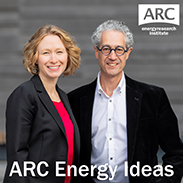
To unpack this tectonic shift in Alberta–Ottawa relations—along with the first wave of media coverage and the deal’s potential benefits for Canada —Peter and Jackie are joined by guest Deborah Yedlin, President and CEO of the Calgary Chamber of Commerce.
Content referenced in this podcast:
- Canada-Alberta Memorandum of Understanding (November 27, 2025)
- Angus Reid Institute Polling on Support and Opposition for Alberta-BC Pipeline (November 27, 2025)
- CBC At Issues Panel on Carney’s Alberta Pipeline Partnership (November 28, 2025)
Please review our disclaimer at: https://www.arcenergyinstitute.com/disclaimer/
Check us out on social media:
X (Twitter): @arcenergyinst
LinkedIn: @ARC Energy Research Institute
Subscribe to ARC Energy Ideas Podcast
Apple Podcasts
Amazon Music
Spotify
Episode 305 transcript
Disclosure:
The information and opinions presented in this ARC Energy Ideas podcast are provided for informational purposes only and are subject to the disclaimer link in the show notes.
Announcer:
This is the ARC Energy Ideas podcast, with Peter Tertzakian and Jackie Forrest, exploring trends that influence the energy business.
Jackie Forrest:
Welcome to the ARC Energy Ideas Podcast. I’m Jackie Forrest.
Peter Tertzakian:
And I’m Peter Tertzakian. Welcome back. So Jackie, I saw your photos off the ski hill. Pretty good, huh?
Jackie Forrest:
Yeah, it was a beautiful day on Saturday, and I’m in love with Mount Assiniboine, so.
Peter Tertzakian:
So, what do you want-
Jackie Forrest:
From Sunshine Village, I could see Mount Assiniboine, which you really can’t every day because it’s often fogged in. Despite the name Sunshine Village, it’s rarely sunny, but.
Peter Tertzakian:
Well, it’s beautiful in the summer from Sunshine Meadows, but in the winter it’s really crisp on a good day.
Jackie Forrest:
I got it. And I have that new iPhone 17, which the camera’s pretty awesome.
Peter Tertzakian:
These new cameras are awesome.
Anyway, from the cold to the prior week, which was pretty warm and hot from a news perspective, we had the Memorandum of Understanding between the Alberta government and the federal government on November 27th, which was the… What was that? That was a Thursday, and it was the topic of much discussion all the way through Friday in the media, I’m sure over many dinner tables over the weekend.
And here we are this morning on Monday, December the 1st. As we flip the calendar, we are delighted to have a special guest, someone I’ve known for 30 years, and I’m surprised we have not had her on the show before. She has been a frequent commentator on business and energy in Western Canada on CBC, the Calgary Herald. She was the former chancellor of the University of Calgary and now has the distinction of being president and CEO of the Calgary Chamber of Commerce.
Welcome, with delight, Deborah Yedlin.
Deborah Yedlin:
Thanks, Peter. Great to be here.
Jackie Forrest:
Okay. Well, we’re happy to have you here, and we’ve got lots to talk about. Obviously since Thursday, there’s been a ton of media coverage, but I thought we’d do three sections to the conversation.
First of all, revisit the events of Thursday and your personal reflections. Obviously, you’ve had a few days to think about it. We’ll talk about some of the details and the missing details in the MOU. And then talk about the response to the MOU over the weekend, which generally was a little disappointing for me when I looked at the mainstream media, and I wanted to recap on some of that.
But let’s start with revisiting the events of November 27th. There were two events. First, the MOU was signed in the Alberta government McDougall Centre in Downtown Calgary, and the Premier and Prime Minister were there. And Peter, you were there. So, tell us about that.
Peter Tertzakian:
I was there too. Well, it was everybody walked into the room early in the morning, and it was really upbeat. I think there was over a hundred people, leaders of the industry, the community at large gathered. And I would say that the mood was extremely upbeat. There was a lot of positive energy in the room.
The Premier and the Prime Minister had signed the MOU. The Prime Minister popped in for a few minutes, said a few words, and then was whisked off to, I believe, a meeting with union leaders and then subsequently the lunch, which I also attended at the Chamber of Commerce, which Deborah Yedlin here hosted.
But I would say in the morning at McDougall, after the Prime Minister left, the Premier got up and gave a speech surrounded by indigenous leaders as well as the same people that were in the room, the community leaders, and delivered really an upbeat speech, I thought, and people were really upbeat, I would say.
Deborah Yedlin:
I agree. I mean, I was also at McDougall and just the way the chatter started before the Prime Minister and the Premier came in to make the few remarks that they did, there was a lot of optimism in the room. And it’s been a long time since you had that kind of vibe that people were thinking, “Well, this is something that will help us move forward.” And we’ve long needed that reset in terms of the relationship between Alberta and Ottawa.
Peter Tertzakian:
I mean, I would peg the last time that there was any optimism, or more to the point when optimism started to fade all the way back to 2007 when we had the royalty trust legislation on Halloween, the so called Halloween massacre.
Deborah Yedlin:
The Halloween massacre.
Peter Tertzakian:
And it was also at 2007 when the then Stelmach government introduced the first of the two royalty reviews over the course of the last quarter century. And it was downhill from there all the way into the 2010s. And this really marked a turning point. As you said, I’ve never been in a room like that for a long time.
Deborah Yedlin:
A long, long time.
Jackie Forrest:
If you think back, Deborah, I think it was in May where Chamber of Commerce hosted Minister Hodgson who came here, and that was when the government had first been elected and there was still a lot of skepticism around the liberals. And we’ve learned in the last 10 years, the liberals have not been favorable to our industry. How would you compare the level of skepticism then to now?
Deborah Yedlin:
Well, I think the skepticism has definitely been, especially last week, has been overcome, and it was really interesting. So when Minister Hodgson came, people were very excited to hear his remarks. He talked about how he’d financed energy deals. He’d been a board member of MEG Energy and really appreciated how important the sector was, friends that worked in the sector, in the trades.
And at the end of that lunch, there was a sense that people did want to stand up and give him a standing ovation. And everybody went, “No, no, it’s too early. We can’t do that yet.” And then fast-forward to what happened on Thursday at the lunch, 1,200 people stood up and gave the Prime Minister a standing ovation before he actually spoke.
Jackie Forrest:
Wow. And then at a second one, right?
Deborah Yedlin:
Then another one after that.
Jackie Forrest:
And big change in his language too, right? He started to use the terms oil and gas and even oil sands where before, if you think about the run-up to the election, we were using this term conventional energy, and everyone was very skeptical, what does he really mean by that?
Deborah Yedlin:
I think that definitely landed well in the room and certainly was… I don’t think people expected to hear that necessarily, but the MOU clearly spells out the fact that this is a pivot in terms of how we support oil sands development going forward.
Peter Tertzakian:
I think one of the most striking things for me, it was subtle, but I always like to listen to language, is that the liberal government, Trudeau, and even the early Carney years, were reluctant to say the words oil and gas or the word oil sands. Indeed, even in the early days of the Carney government here earlier this year, he would refer to oil and gas as conventional energy. But there was no mistake last week, oil and gas and oil sands.
And I mean, I think that’s a healthy thing. Why are we trying to find euphemisms or to try and cloak what is the largest resource industry in this country by far that generates $160, $170 billion of revenue and $30 billion in royalties and taxes? I mean, why would you not acknowledge that?
Deborah Yedlin:
And when you think about it, one of the things that he talked about as well was we’re going to build big things, and we’re going to build big things fast. Well, let’s just think about that for a second. The energy sector actually masked the lagging productivity of the Canadian economy. And so much of what we built in the early 2000s up until 2014 was energy related, and we haven’t really built anything since, other than Trans Mountain and LNG Canada.
So when you think about it, the energy sector itself masked the declining productivity because of all the investment that was happening in that sector starting in 2000 that really ran to 2014. And then when you look at the curve, it just falls off.
Jackie Forrest:
Well, and that’s the root issue here is that the Canadian economy is not performing. Our debt is growing. Our productivity is going down at a time when there’s lots of threats in the world. Did the Prime Minister talk about that?
Deborah Yedlin:
One of the things he said was, which I think resonated with everybody, and myself especially, was that we talked about the global trade flows being upended. And then he said that our relationship with the United States had been ruptured, and that was going to necessitate a deliberate pivot in terms of developing other markets and decreasing the fact that we’ve overindexed on the US market. We have to do better at diversifying our portfolio, so to speak, and ship to new markets. This whole conversation about the MOU is absolutely about that.
Peter Tertzakian:
We’ve talked about that, Jackie, you and I, on this show many times, that we need to diversify because of the world economic situation. Effectively, it’s now geoeconomics, which is the pursuit of geopolitical influence using economic warfare. Whether it’s tariff, sanctions, control of critical supplies, control of transportation routes, and so on and so forth, we need to diversify away from a single market if we are going to defend ourselves at a minimum. Or it would be nice actually to be a negotiator at a trade table where we actually have some kind of leverage where we can use our resources, whether it’s oil, gas, critical minerals, agriculture, potash, whatever, to actually have favorable outcomes rather than give our resources away at a discount.
Jackie Forrest:
Right. If we had other avenues to sell our product, would the Americans be treating us this way? They know we have nowhere else to sell but to them. Or would China be treating us the same way with canola if they took a bunch of our crude oil?
This is one thing I think that’s really lacking in the dialogue this weekend, we’ll get to it, is this idea that it’s a new world. We’re not living in 10 years ago. There’s real threats to our country. And what I took away from it is our Prime Minister’s showing a lot of courage. He’s doing the right thing, even if it’s not politically popular. And there’s certainly a lot of political risk, as we’ve seen. There’s liberal MP Steven Guilbeault has quit the cabinet. There’s chatter that other people will maybe even quit the Liberal Party, but he’s doing the right thing, which I really respect.
Peter Tertzakian:
We have to do the right thing because this is not just a nice to have in terms of the pipeline. We need to build under Bill C-5 ports, railroads. We have to expand them and move our products globally into diversified markets, into markets that are big growth markets like the Asia-Pacific and into places where, as I said, we can have some kind of negotiating leverage so, at a minimum, we’re not giving away our goods for discounted prices. We are actually able to protect our sovereignty, and this is a national security issue.
Deborah Yedlin:
And I think that’s the piece that’s been missing. Economic prosperity, it’s a sovereignty issue for Canada. So we have to connect the two pieces. In order to maintain our sovereignty, we need economic growth and security from that perspective. And that’s the piece that’s been missing in the conversation for a long time.
Jackie Forrest:
And the narrative has been we’re abandoning our climate goals, but not in the context of the new world order and the other kind of priorities we have.
Okay. Well, let’s go on to some of the details of the MOU, and then we’ll finish up with some of the chatter this weekend. We will put a link to the PMO statement in the show notes that outlines the MOU. The first takeaway is it does get rid of some bad laws and policies for Alberta. I think you can recall our-
Peter Tertzakian:
I think it’s for the country, Jackie. It’s not just for Alberta. I mean, there’s this feeling that Alberta takes all, but the MOU is far more than just about pipelines and oil. It’s about a whole suite of policies and regulations that were impeding growth.
Jackie Forrest:
Well, and that’s true, and let’s go through them. The elimination of the oil and gas emissions cap, which is actually not a policy. It was just threatened since 2022. I looked it up. That’s when we first started talking about this thing. It’s driven capital away from the sector, and that’s impacted a lot of provinces.
I went to Newfoundland earlier this year. That was their biggest issue. They have the potential for some new offshore projects, but this oil and gas cap is a barrier for investment. And so even though it didn’t even exist as a policy, it was stopping people from wanting to invest in this country. And that includes BC, Saskatchewan, and Newfoundland or other oil and gas producing provinces.
Peter Tertzakian:
As I said, we’ve got to get away from thinking this was just an Alberta thing.
Deborah Yedlin:
No, I agree. I think that’s the piece. It really, when we talk about the emissions cap, the specter of uncertainty sidelines investment. And we know that dollars go to where they can get the best return with the least amount of resistance. And if there’s some potential that you are going to have something overturned, you’re going to allocate your capital somewhere else, and that’s exactly what’s been happening. It was effectively a cap on production, and people weren’t going to be allocating capital here anywhere beyond their maintaining production.
Jackie Forrest:
Well, and it really clashed with this idea like let’s talk about LNG. Our Prime Minister’s talking about growing to 15 million tons by 2030 in terms of exports. That’s annually. That’s the equivalent of over six PCF per day. Although our producers are doing better all the time in terms of less emissions for every unit they produce, you can’t grow 35% in your production and not have some growth in the overall emissions. And so for people building these export terminals, it’s like, well, how can I build an export terminal if the upstream side is constrained? And so great news for every province, as you say, Peter.
Deborah Yedlin:
But also on the emissions cap, constraining the investment also means compromising your ability to really move forward on economic reconciliation with indigenous peoples because you’re putting a cap on what you can invest. And we know that the energy sector continues to be the biggest employer of the indigenous peoples in this country, and so you’re also compromising your ability to really move forward on economic reconciliation.
Jackie Forrest:
Well, and you’re even capping the economic benefits. Like these LNG terminals, the two that have been put forward to the Major Projects Office are over $40 billion of capital investment, and that’s only on the facilities. The upstream side also has a potential for a lot of economic growth.
Deborah Yedlin:
Well, and I think that’s the piece that’s been missing too. Everybody keeps talking about the LNG terminal or the pipeline, but this is going to necessitate huge investment in the upstream. Let’s talk about that.
Peter Tertzakian:
Well, actually I think in the MOU the most meaningful and most immediate policy reform and benefit is the clean electricity regulation.
Jackie Forrest:
Yeah, that’s another one. Now in the MOU it said just for Alberta the clean electricity regulation would be suspended pending a new carbon price agreement by April 1st. That’s April Fools’ Day, but it won’t be a joke. Hopefully that’ll really happen on April 1st. And that Alberta is still required to meet the net zero by 2050 goal, so Alberta can come up with their own way of doing that.
And also over the weekend, Minister Hodgson was in an interview that said he would be open to talking to other provinces about the same deal. If they were willing to put in their own rules to get to net zero 2050, they could scrap the CER. And so that is great news. I think it has been a big barrier for things like data center investment because it really made investing in natural gas generation difficult.
Deborah Yedlin:
The CER made absolutely no sense for an Alberta construct. We have no hydro. Renewables are great when the sun’s shining and the wind’s blowing, but we know that even when it’s really cold, nothing happens.
Peter Tertzakian:
No.
Deborah Yedlin:
And prices go up and there’s a risk to the stability of the grid.
Jackie Forrest:
And honestly, the CER, even if you wanted to achieve net zero by 2050, it was poorly designed. It actually resulted in you having to put CCS on very old plants. You just might as well shut them down because putting carbon capture storage on an old plant is way more expensive than doing it on a new plant.
And anyway, so it was just so poorly designed that I think even if you had the goal, which it seems from the MOU that is still the goal, there’s much more efficient, lower cost ways of delivering on that.
Deborah Yedlin:
Well, the ISO was really concerned about what it would do to the cost of electricity, and fair enough, and also the grid stability if we didn’t have that reliability, so.
Peter Tertzakian:
I’m actually a believer you may even achieve net zero in some of these segments of the economy before 2050 because technology is accelerating so quickly in so many different areas that we don’t need to rely on these sorts of policy constructs, or we should try and encourage the policy constructs that encourage technology rather than trying to impede segments of the economy by dates and deadlines that make no sense.
Deborah Yedlin:
You’re right, Peter, because that was what we kept talking about was that these deadlines and these goals were great in theory, but the technologies that we needed to have in place in order to achieve those goals don’t exist yet, or they don’t exist in scale or they haven’t been proven. There was a lot of magical thinking that was going on in setting these deadlines.
Jackie Forrest:
It’s a great point because we are advancing SMRs, small modular reactors. They’re quite expensive right now, but the idea is they’re going to come down in cost. By 2050, they may be a low-cost alternative because carbon capture storage on natural gas plants is very expensive and energy intense, and I don’t think it actually improves too much in terms of the cost. So we never know what comes by 2050. That’s a long time.
Now, the MOU also talked about the potential for thousands of megawatts of AI data centers. And I believe this clean electricity reg was holding back the potential for Alberta to get data centers because it meant that natural gas generation was going to be quite expensive if you needed the carbon capture storage on it. So let’s hope that this results in some new final investment decisions around these data centers.
Deborah Yedlin:
Well, it also dovetails with another item that was in the MOU about sovereign data because so much of our data gets routed into the United States now. And so if we really want to make sure that we maintain our sovereignty, we need to have that capacity, and right now we don’t.
Peter Tertzakian:
This data reshoring. In other words, bring the actual digital bits and bytes that are stored in where we don’t even know, this cloud that hangs over the world that’s moving around, that bring it actually physically back to Canadian soil.
Deborah Yedlin:
And this is definitely something that’s top of mind for the Prime Minister and makes sense. But if you don’t have the electricity policy behind it, you can’t really afford-
Peter Tertzakian:
Well, this is top of mind for every country in the world right now. Is this just this issue of not only reshoring industries to a post-pandemic world, ensure you have supply chain integrity and reliability, we also have the same for our digital supply chains and storage.
Deborah Yedlin:
Which we’ve just ceded control to other jurisdictions.
Jackie Forrest:
Okay. Well, let’s hope that this change results in some investments here in Alberta. Most of the other provinces are so short power that I don’t know that that is an option for them, but it would probably would help in other provinces as well.
Another bad law is the oil tanker ban in the Northern Coast. It would be adjusted to allow bitumen exports from a deep water port for a proposed pipeline, if needed. That’s interesting. The MOU actually doesn’t say that this is going to be in the Northern Coast. It doesn’t actually say that. So it could be in the lower mainland, but this requirement would be needed if it does end up landing in the North Coast, so that was good to see.
Peter Tertzakian:
I mean, my take on when you say bad law, my take on it is a bit different than other people. And that is that there’s a certain hubris and arrogance in thinking that only a segment of BC’s coast is pristine and there somewhat implies that the rest of Canada’s coastline doesn’t matter. Do you know what I mean?
Okay. If you think that segment of our coastline is pristine, why isn’t Nova Scotia’s pristine or why isn’t these Arctic waters or other parts of the St. Lawrence Seaway? It’s all pristine, in my opinion. So if you’re going to ban tankers on one segment of our coastline because you think it’s pristine, as far as I’m concerned, you ban it everywhere.
Deborah Yedlin:
Yeah.
Peter Tertzakian:
Or not.
Deborah Yedlin:
And that’s obviously not going to work, so let’s talk about what’s realistic.
Peter Tertzakian:
I just felt that, I mean, obviously the tanker ban was meant to forever impede the transit of oil. But actually the premise that it was, and I think that this was in the wording of the original materials that went into the tanker ban to justify it, it was this is a pristine coastline. And I remember reading it at the time. I said, well, wait a minute, what gives this particular … Yes, okay, there’s the spirit bears, et cetera. Well, okay, I mean, there’s fantastic wildlife and pristine landscape everywhere in this country. You can’t just single one place out and claim it to be special, as far as I’m concerned. I just, do it for all coastline or none.
Deborah Yedlin:
Or all the entire landscape. Remember that the Trans Mountain, actually the anchor loop does go through Jasper National Park, and it’s a world UNESCO site, and nobody knows that.
Peter Tertzakian:
Right. And then the other part of this story, these tankers is as if oil is the most toxic of anything. It isn’t.
Deborah Yedlin:
No.
Peter Tertzakian:
I mean, let’s talk about ammonia tankers. I mean, it’s like let’s put this in perspective.
Deborah Yedlin:
Well, and the thing is too, we don’t know what the root will ultimately be.
Jackie Forrest:
We don’t.
Deborah Yedlin:
And so this is all conjecture at the moment. It could end up going, as you said, to the lower mainland. It wouldn’t have to go North. That depends on routing, that depends on what’s feasible, that depends on so many other variables, but we don’t know what those are.
Jackie Forrest:
And the one thing I do know though, we can’t see a million barrel a day pipeline go to the current Burnaby Port because it’s very bottlenecked and can only take small tankers. But I have been told by experts that there are other locations in the lower mainland that you could get the very large crude carriers into, so it could go into that area too.
Deborah Yedlin:
But your point, Jackie, about the Port of Burnaby, broadly speaking, that’s what we need to do as a country is to increase the capacity of our ports because that’s part of our economic diversification play.
Jackie Forrest:
And that comes to the next thing, a priority for an Alberta bitumen pipeline to Asian markets, so we know it has to be on the West Coast, with the opportunity for indigenous co-ownership and benefits, and it will be deemed a project of national interest. And it is also conditional on this very large oil sands carbon capture storage project going forward called Pathways.
So the first thing I want to talk about is this designation of a project of national interest is a big deal. It will allow a fast tracking, a two-year review. And while many projects have been referred to the Major Projects Office, many of them already had their environmental certificates, so they weren’t really deemed in this category. This might be one of the first projects that is, so I look at that as a really a good way to derisk this project. If we have any way of trying to get private capital to invest in this, we need to derisk this project quickly. And so I think this is a pretty important concession.
Deborah Yedlin:
I completely agree. I think, but back to Peter’s point about economic nationalism, I’m still wondering if there will need to be some sort of federal guarantee to get it moving for a time. And then you have the private sector, and that’s how you can attract the capital to build the pipeline just from a derisking standpoint. I’m not sure that it can move forward without that.
Jackie Forrest:
No, no. And I think it may be the provincial government. I think this will have to go a long ways before private capital gets in. These sorts of things help to accelerate that, but I think that either the Alberta government or the federal government, or both, are going to have to support it because we’ve created an environment that doesn’t make it easy for people to invest in these projects.
Deborah Yedlin:
No, and we look at Trans Mountain and we know that’s exactly where we are.
Peter Tertzakian:
Okay. So there’s this other part of this, which is, and I want to rewind to this April 1st deadline, because there’s a number of things that are hinging on April 1st.
Jackie Forrest:
Right, which isn’t that far away really. But the pathway partnership companies, so these oil sands companies that are going to build the large carbon capture storage project, need to develop and enter into a trilateral MOU on or before April 1st basically with a plan of how they’re going to build this carbon capture storage project. And this is a condition of moving forward with the pipeline. So this is a pretty important thing. The industry has to agree that they’re going to build this project.
And an important piece to that is what the cost of carbon is. And as we’ve talked about on the podcast before, because we have an oversupply of carbon credits right now in the market, the tier pricing is like-
Peter Tertzakian:
$20.
Jackie Forrest:
…$20 a ton or something like that. But part of this agreement said that the Alberta government commits to strengthen the carbon price to at least $130 per ton and make it globally competitive. So that will help a little bit with the course a lot.
Peter Tertzakian:
How are they going to do that? Are they going to start buying carbon credit? I mean, there are so many credits out there.
Jackie Forrest:
Well, there’s a number of ways you can do it. You can change the stringency. You can just make a law that the minimum price that can be sold is 130. I mean, that’s part of the… April 1st is also, everything’s going to happen on April 1st.
Peter Tertzakian:
Well that’s-
Jackie Forrest:
They’re going to come up with a plan on how they’re going to do that, Peter.
Peter Tertzakian:
I mean, that’s like price fixing. What’s the point of a market if you’re fixing the price?
Jackie Forrest:
Well, but one of the big issues with investing in carbon capture storage has been that you have no certainty in the price.
Deborah Yedlin:
There’s no floor.
Jackie Forrest:
And therefore, how can you build these projects? So having a floor is very critical. When you combine that with the fact that you have the investment tax credits that the federal government is offering and then the Alberta Carbon Capture Incentive Program, which offers about 12% off your initial capital cost, plus the $130 a ton, I don’t know if you can totally get there. I don’t think you can totally get there, but it certainly helps. Because when you have $20 a ton, it’s just hard to see how that works.
Peter Tertzakian:
I think this is going to be a point of contention, or it’s going to be tension between now and the end of March. The point is you can’t put a minimum price on something in a market without incurring a cost that someone has to pay. So the question is who is going to pay?
Deborah Yedlin:
You’re right. That is going to be probably one of the places everybody gets stuck. The other thing though is the imperative of figuring out what that number actually is the only way we move forward on this project. And so without that certainty in terms of how you’re going to model it, nothing happens.
Jackie Forrest:
I mean, there are some solutions here. I don’t know if they can be figured out by April 1st, but we could start trading with other provinces, and that could help keep a floor to the price.
Peter Tertzakian:
You’re going to negotiate that in three months?
Jackie Forrest:
Well, I know.
Peter Tertzakian:
I mean, we can’t negotiate how to trade wine, let alone carbon credits.
Jackie Forrest:
Well, but I understand what you’re saying. And unfortunately, one of the tools you can use to create a floor is just keep increasing stringency. That’s how many emissions fall under the program. But that has a cost too because as you increase the total number of emissions, the cost of the industry goes up, and it becomes difficult to be competitive.
It’s interesting. It keeps using this term, which I know you love, Peter, competitive carbon price. Well, when the United States doesn’t have a carbon price, when no one in the Middle East has a carbon price-
Peter Tertzakian:
You’re competing with no one.
Jackie Forrest:
…how can we be competitive? We’re not competing with anyone.
Deborah Yedlin:
It’s the one hand clapping.
Peter Tertzakian:
We’re competing with ourselves. And the number, I think, what is it, like $16.5 billion?
Deborah Yedlin:
Yeah, 16.5. Which is the number that they’ve used through the piece.
Peter Tertzakian:
That’s the capital cost to build a carbon capture facility. It does not include the operating costs.
Deborah Yedlin:
No, and that’s actually that, the 16 billion is what the companies have committed to putting into the project.
Jackie Forrest:
And by the way, I was looking up, that number has been quoted for about four years. So how accurate is that number?
Peter Tertzakian:
No, that’s right.
Jackie Forrest:
Everything has gone up a lot, so I’m not sure what it really costs today.
Well, the one thing I will say, if there’s a positive here though, one of the issues with tier was the policy pancaking. And one of the things that’s made me mad this weekend is this dialogue that somehow our carbon policy was perfect, and by killing parts of it, that’s such a loss.
Well, the reality is things like the clean electricity reg and the growth fund and some of these things, they created distortions in the carbon market. And so people would operate because they needed to meet these other regulations, and they would oversupply the market with credits. And so maybe cleaning up some of this carbon policy, these other layers, the policy pancaking, as you call it, will help make the carbon price a bit easier to manage.
Peter Tertzakian:
I agree with you, Jackie. The perception that we had the world’s best carbon policy was definitely resonating in other parts of the country, but it was far from perfect.
Deborah Yedlin:
Oh, God. It wasn’t perfect at all. I mean, I think it just created more uncertainty, and it sidelined investment and people really didn’t know what they were working on.
Peter Tertzakian:
And how many times on this podcast have we talked about the complexity and density of the policies, the layering, the chaining of the policies across the energy systems to the point where nobody understood it, and therefore nobody would invest.
And then the whole idea of the emissions cap, which was another carbon market layered on top of, what is it, 11 carbon markets that none of which really function properly. Certainly the one here isn’t functioning when the price of a credit is $20 when the headline price is supposed to be $95. So it’s absurd to think that you can fix a dysfunctional market with another market.
Deborah Yedlin:
But that was the whole thing, right? It was like, oh, this might not work, so let’s add another policy just in case. And that way, this new policy will make sure that it actually functions the way we want it to, and that was not the case at all.
Jackie Forrest:
Well, and here’s the example. We haven’t really seen a bunch of projects go forward. We’ve been talking about carbon capture storage for three, four years now, and it’s mainly because, in my view, there’s all these distortions to the carbon market, which makes it hard to predict the price. And so maybe if we can simplify things, it’ll be easier to maintain.
Peter Tertzakian:
Well, this goes a long way to simplifying things.
Deborah Yedlin:
Yeah, I agree.
Peter Tertzakian:
I mean, you’ve got the clean electricity regulation, which wasn’t a market, but it was part of the density and complexity of the whole energy landscape in this province.
Jackie Forrest:
Okay. Well, let’s move on to the other topic, maybe the most prickly topic of all, is that Canada and Alberta agreed to engage with British Columbia immediately in a trilateral discussion on the pipeline project, including further BC projects of national interest and interties to connect Alberta electricity to BC. Wow. So we already learned from Premier Eby, not a big fan of this idea. I think he called it an energy vampire because it’s going to suck the energy away from real projects. He doesn’t view this as a real project, and there’s a lot of work to do if we have to get BC to agree to this pipeline project.
Peter Tertzakian:
I sympathize with him somewhat. He’s got a minority government, and what else is he going to say?
Deborah Yedlin:
Yeah, I agree. It’s fine to grandstand for the benefit of your province. But when we are sitting at a moment in time as a country and we really have to focus on what’s best for the country, it really comes across as being a bit rich when you have somebody saying, “Well, we think this is going to be an energy vampire. It’s a fictional, non-existent, unfunded project.”
Peter Tertzakian:
I totally agree, but I mean, this is the reality of our parliamentary systems, isn’t it?
Jackie Forrest:
But we have to be leaders here. I mean, we just talked about the threat to our country right now and the need to diversify our markets. We can’t have 75% of everything we sell go to the Americans. And if we’re going to sell things internationally, we need to go through BC to Asia.
Deborah Yedlin:
And by the way, BC needs to access the rest of the country too. It’s not just what we want to do. They need to recognize that they have to ship goods East. So it’s-
Peter Tertzakian:
Good answers. I’m just trying to wind you up.
Jackie Forrest:
Well, you know that I did do some work on this this weekend, just to remind or go back in time because this is not the first time we’ve faced this.
Deborah Yedlin:
Oh, no.
Jackie Forrest:
We have a very short memory. But in 2018 BC tried to amend its environmental rules to require BC to approve shipments of heavy oil, if you recall. It was called the Turn Off the Taps bill. It actually failed in a BC lower court, and then it went to the Supreme Court in 2020. And the Supreme Court very quickly refused to appeal the decision because they said that interprovincial pipelines are under federal jurisdiction and there is a constitutional right for certain powers to only one level of government. So BC really doesn’t have much way legally to stop this pipeline.
And then the other thing I was thinking about is, do you remember Christy Clark had her five conditions in 2012?
Deborah Yedlin:
Yep.
Jackie Forrest:
Well, she put forward five things. She actually didn’t have the right legally to do that because constitutionally she can’t stop the pipeline anyway, but she did get her five things, and she had a political win, and maybe this is how this could play out this time. They’re already talking about interconnect from Alberta. BC’s very short power right now. There’s actually a lot of value to that for them. Maybe there’s, through these nation building projects and these mining projects they want to get going-
Deborah Yedlin:
Well, and the CER. I mean, the interties, that sort of come under the change in the CER.
Jackie Forrest:
It will allow us to be maybe long electricity here in Alberta and the ability to help BC meet their growing load, especially for these LNG projects and things.
Deborah Yedlin:
Absolutely. There’s no new site see on the horizon. So they’ve got to figure out how to make sure that the electricity that’s supplying the next tranche of LNG projects is low carbon.
Jackie Forrest:
Well, and BC is short power even in the absence of that. They’ve just done a major call for new wind. I think before the end of this year there’ll be a second call for new wind projects, and so they do need power. So I think there is a win-win here. And I have to hope that if I rewind the clock around the Trans Mountain, that it happens that there’s a political win here for Premier Eby where he gets some things for the province and can move forward with this pipeline.
I also think another thing is we can be flexible on the location of the pipeline. It could go to the lower mainland, if that’s politically something that BC can live with more than the Northern Coast.
Deborah Yedlin:
Well, and if I’m not mistaken, there was also a provision as part of the trilateral conversations that have to happen is that BC will benefit from a financial standpoint from whatever’s agreed to. And that was one of Christy Clark’s, one of her five conditions was that if BC was going to get its fair share. So I think there are ways to make this work. I just think that the friction that’s being created right now, it’s not helpful. Let’s just figure out how to move forward.
Peter Tertzakian:
I want to get back to these conditions, okay, the Christy Clark conditions. Northern Gateway had 109 conditions, I believe it was, which were met.
Deborah Yedlin:
Yes, they were.
Peter Tertzakian:
And then you meet conditions.
Deborah Yedlin:
And it didn’t matter.
Peter Tertzakian:
And it didn’t matter. You got to axed to put in the tanker ban or ax the whole project in parliament. And I mean, this is my fear is that even with this MOU there’s conditions, and you meet the conditions and then somebody comes out of the woodwork and says, sorry, that’s not good enough.
Deborah Yedlin:
So let’s rewind the clock again to 2016 when then Premier Rachel Notley agreed to the 100-megaton cap in the oil sands, and that policy, because there was no MOU, it was an agreement, was meant to get the government to approve Trans Mountain. And so is this a way to do the same thing?
Peter Tertzakian:
Well, it could be.
Deborah Yedlin:
Remember, it was just a handshake. There was nothing that was actually officially signed, but we needed to get Trans Mountain approved, and that’s where that policy came from.
Peter Tertzakian:
Well, I guess these are the political realities. And I think all of us around the table here wish we didn’t have to do all this political jockeying to get done what needs to be done.
Deborah Yedlin:
Because other countries don’t have to do it.
Peter Tertzakian:
At the time of global economic warfare and crisis, as we’ve discussed on this show many times now, we just need to get stuff done, and it’s just painful to watch all this political jockeying and everything affiliated with that. And on that note, I guess there’s a response to all this stuff that happened immediately after.
Jackie Forrest:
Okay. Well, let’s talk about the response then over the weekend, right away on Friday, and then over the weekend to this MOU. There certainly was a lot of negative coverage around the theme that Carney is selling out the climate agenda. Let’s just rant about the CBC, Peter, because that’s been a theme recently of the podcast. But I did want to really talk about the CBC At Issues panel. Chantal Hébert and Althia Raj were not supportive. I would almost say it was a visceral reaction, we’re just selling out our climate agenda here.
Deborah Yedlin:
Well, the absence of any sort of economic impact and understanding of what this means from a national standpoint was shocking. That it was an entirely politically focused response within the absence of where we are from an economic standpoint was shocking.
Jackie Forrest:
Well, and Chantal was talking about why would Mark Carney use all this political capital to help Alberta when he doesn’t even have any members of parliament there, and therefore he shouldn’t be helping them out. It’s politically the dumbest thing he’s ever done. He’s made people angry in Quebec because Steven Guilbeault is just so loved in Quebec and now he’s… Well, he chose to leave the cabinet. No one told him to leave the cabinet. So right, it was focused on the political dynamics, not what’s the right thing.
Deborah Yedlin:
Right. And what Prime Minister Carney’s clearly focused on is doing what’s right for the country, assessing the economic opportunities that we have, what is the order of operations in terms of which levers we can pull to get the biggest impact. And truly, one of those levers that will yield the biggest response in the shortest amount of time is giving a signal to the energy sector that it is actually open for business, able to invest, increase production. Because, by the way, that’s the other piece that we have to do is if we want a pipeline, we need to increase production. We need shippers on that pipeline. There’s a few things that still have to happen.
But for coverage, broadly speaking, to ignore that very important fact was very frustrating.
Jackie Forrest:
Oh, it was frustrating. And then the other-
Deborah Yedlin:
And there was no mention of Canada on that panel. It was just Alberta. It was energy. It was not the economic impact. It wasn’t about the employment numbers. It wasn’t about GDP. It wasn’t about diversifying markets. And what it means in the context of the current global climate was just about siloing the conversation between one province and another province without consideration to other countries.
Jackie Forrest:
Well, and another thing… See now you got me going, Deborah. But another thing that really angered me is that somehow our decisions are so consequential to global climate change. This is the reality. We are 1.5% of all the emissions. The decision to build this pipeline or not is a tiny, tiny fraction in the global emissions. Just to put it in perspective, if we shut our entire economy down, next year China would grow, that same amount of emissions would be replaced just by China’s growth.
Deborah Yedlin:
Well, and they have 1,400 coal fire plants that are on the horizon to be built this coming year. So let’s just talk about what those emissions are.
Jackie Forrest:
Yeah, and if we don’t build this pipeline, then that oil will be supplied by, let’s say Russia, the Middle East, Iran. Oil will be demanded, and so this idea that was throughout that was that somehow we’re just terrible people for the environment here.
Deborah Yedlin:
We’re going to cause all the environmental damage. Well, I think that’s, I can’t tell you how many times I have written or said if we stopped producing today, it would make any bit of difference on the planet in terms of the-
Peter Tertzakian:
Give a bit of a different take on this. I mean, every single project either approved or proposed on Bill C-5 infrastructure building has environmental consequence, including climate consequence. Why is it that this one takes the lion’s share? Okay, we know that the emissions from the segment upstream are large, but there’s all sorts of-
Deborah Yedlin:
But the intensity keeps coming down too.
Peter Tertzakian:
I mean, there’s a lot of the intensities coming down. There’s this perception that the industry’s done nothing, which is false, that the intensity hasn’t been coming down, which is false. But then we look at these other projects, and every single one of them has some kind of environmental impact, whether it’s on biodiversity, emissions or what have you. Nobody in Alberta starts screaming about projects in Ontario or Quebec or wherever, but it’s only this one that has become politically charged. Okay, I get that.
Deborah Yedlin:
Well, and don’t bias the conversation. I think that’s what’s really challenging. You have people who take one side, and then you rarely have people who have a real understanding of the industry, the economics and all the things that have happened, let’s call it over the last 20 years. When we talk about how we’ve increased production, decreased emissions intensity, et cetera, there’s one element that’s missing, so you’re almost talking into a vacuum.
Jackie Forrest:
Well, another big element that was missing from the discussion this weekend, not just that particular example, but over the whole weekend, was recent polling. Actually, polling that was done from November 26th to November 27th, the day that this was announced, shows that the majority of Canadians and people in BC support this West Coast pipeline idea.
So just to go over the numbers, and I will put a link to this in the show notes because it did not get the press that it deserved, that we have 75% are not opposed to the pipeline nationally. So 60% support it, and 15 are unsure or have no opinion. So that’s how I come up with the 75%. Only 25% of people oppose building this pipeline.
Let’s go to BC, where support in BC is more than 60% when you include the people that support it, which are 53%, and then people that are neutral and don’t really have an opinion, only 37% oppose it. Well, you wouldn’t think that by reading the media this weekend. It doesn’t represent what Canadians think, and actually Premier Eby doesn’t represent what BC people think.
Deborah Yedlin:
And I think that’s where we run into a roadblock. Because we live in such a fragmented media landscape, people find what they want to find and their confirmation bias down their particular rabbit hole. This is not a convenient number to unearth or pay attention to, and so they can choose to ignore it because they can find something else in the media that’ll justify their perspective.
Peter Tertzakian:
So what do we need to do? We’re talking about what we know is the reality of the situation. So what needs to be done, Deborah? You’re a journalist for a long time.
Deborah Yedlin:
Journalist for a long time and just have spilled so much ink on this topic. And really it is a values-based conversation about what’s important for the country and how it contributes to Canada as a nation that is one that is doing what it needs to do to maintain its own economic opportunities and sovereignty.
But it becomes a values-based conversation for so long. All we’ve done is try to answer every question or debate every question with numbers. You don’t understand. It’s this number. It’s 160 billion in revenue, et cetera, and it doesn’t land. But I think what we have to do a better job at is saying, okay, that revenue translates into these taxes. This means your federal programs are funded, your provincial programs are funded. We’ve never made those connections.
Peter Tertzakian:
Right. I think there’s certainly a perception, and I’d love to get your take on it, that the pipeline is only for the benefit of Alberta.
Deborah Yedlin:
And that is absolutely the narrative that was missing on the weekend, which was so frustrating. It was just about Alberta. It was about Alberta’s energy sector. There was on what it might do to BC. That there was no conversation about the impact on what it means for-
Peter Tertzakian:
I mean, there was no acknowledgement that during the building of the last development of the resources, the oil sands, and so on 10, 15 years ago, that there was all the fly in, fly out labor from Newfoundland, Nova Scotia, the maritimes at large, actually probably the country at large, at a time when we had the financial crisis. And actually, it was this kind of investment that shielded us, in part, from that kind of-
Deborah Yedlin:
Of economic dislocation.
Peter Tertzakian:
…economic demise that many countries felt.
Deborah Yedlin:
So there was a great chart that was put out by RBC, and it showed the divergence in terms of where our unemployment rate numbers were, where they were with the energy development, and what would’ve happened if we wouldn’t have had it. And our unemployment numbers would’ve been so much bigger than what they otherwise would’ve been through the piece post-2008 because of all the activity that was going on in the energy sector.
Peter Tertzakian:
I definitely think there’s a failure of communication that-
Deborah Yedlin:
Well, that sounds like Cool Hand Luke.
Peter Tertzakian:
Who?
Deborah Yedlin:
The movie Cool Hand Luke with Paul Newman.
Peter Tertzakian:
Oh, Cool Hand Luke.
Deborah Yedlin:
“What we have here is a failure to communicate.”
Peter Tertzakian:
Oh, Paul Newman, a failure of communication that we’re not effectively communicating the benefit.
Deborah Yedlin:
But you know what, Peter? We haven’t had an energy champion as a Prime Minister for a long time. And someone who actually believes in the importance and understands what the economic impact is and is now not afraid to talk about it.
We were talking our own book, and we’ve talked our own book for a long time. And very well, thank you very much. But what happened on the weekend, actually, I think is really interesting. And because of that MOU, this was the conversation that was taking place from coast to coast. We haven’t had that in Canada, if ever. And so people starting to understand why this is important, what we have to do, how do we have to move the economy forward, why does this make sense at a moment in time now?
Jackie Forrest:
Well, and I think the dialogue, Mark Carney needs to help the country to understand the threat that we’re facing. I think people in the auto sector understand it, but we’ve got these authoritarian leaders, we’ve got the Russia, we’ve got the Middle East war, we’ve got Donald Trump on every element, including what he’s doing in Venezuela right now. We need to grow our economy and our power and put it in that framing.
The other comment I wanted to make is, this shift has already made a difference. Maybe people don’t recommend it, but federal support matters. If you look at the LNG situation, over the last couple of months, our federal government has been supporting LNG. Went to Asia, talked about 50 million tons by 2030 annually, doubling again in the next decade. Already we’ve seen more M&A in the oil patch than we’ve seen in years, more US investment coming into Canada.
We’ve seen higher multiples for our stocks. Our Canadian oil and gas stocks are outperforming their US peers, so this stuff really matters. And actually it really shows to me that this was really hurting our economy. We always believed that, but we’re seeing the evidence just with a change in messaging. Nothing’s really been constructed yet, but the idea that it’s possible does make a difference.
Deborah Yedlin:
When you think about how foreign investment in the sector fell off so dramatically, and the fact that we’re starting to see private equity come back into the oil patch, the M&A that’s happened, the valuations, you’re right. I also think we’re going to start to see spinoffs of asset packages and a resurgence. Now that we’ve got this different paradigm from a regulatory standpoint, I think we’re going to see growth of new companies starting to prop up because there’s access to capital, which has not happened for a long time.
Peter Tertzakian:
Well, it’s been a fascinating, if not spirited discussion on the Memorandum of Understanding last week between the federal government, the provincial government. And I think we can agree it was a milestone event in terms of federal attitudes toward resource development, particularly oil and gas. This is going to be a subject of mush discussion, certainly all the way through till April 1st, which is the next-
Deborah Yedlin:
April Fools’ Day.
Peter Tertzakian:
…and the next and beyond. So Deborah, thanks so much for joining us. We must have you back to continue the dialogue and discussions on all the twists and turns this story is, no doubt, going to take between now and then, and certainly throughout 2026.
Deborah Yedlin:
Thanks for having me. It’s been great.
Jackie Forrest:
And thank you to our listeners. If you enjoyed this podcast, please rate us on the app that you listen to and tell someone else about us.
Announcer:
For more ideas and insights, visit arcenergyinstitute.com.
