Recapping CERAWeek 2026
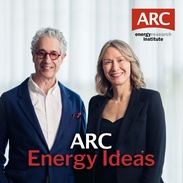
This week on the podcast, Jackie and Peter unpack key themes from the CERAWeek conference held in Houston from March 23–27, 2026.
Highlights from the conference include:
- Canada is back on the global stage: Senior political leaders promoted energy investment opportunities, with notable alignment between federal and provincial governments.
- Iran conflict and the Strait of Hormuz: Experts from multiple perspectives shared views on the conflict and the challenges of reopening the Strait, with general agreement that doing so would be difficult.
- U.S. energy dominance and permitting reform: Senior U.S. officials shared goals to expand energy production and streamline permitting processes to accelerate project development.
- Energy security for importers: Ongoing geopolitical uncertainty is reinforcing the need for diversified energy supply (across energy types and geographic sources) and increased domestic production among importing countries.
- AI and electricity demand: While innovation continues, electricity supply is still considered the key constraint on the pace of AI-driven growth.
- Quiet momentum in clean energy: Despite reduced policy support and funding, companies continue advancing technologies, with potential for meaningful breakthroughs in the years ahead.
Content referenced on this podcast:
- National Petroleum Council study on permitting reform, “Bottleneck to Breakthrough: A Permitting Blueprint to Build” (2025)
- NVIDIA and Emerald AI Join Leading Energy Companies to Pioneer Flexible AI Factories as Grid Assets (March 23, 2026)
Please review our disclaimer at: https://www.arcenergyinstitute.com/disclaimer/
Check us out on social media:
X (Twitter): @arcenergyinst
LinkedIn: @ARC Energy Research Institute
Subscribe to ARC Energy Ideas Podcast
Apple Podcasts
Amazon Music
Spotify
Episode 320 transcript
Disclosure:
The information and opinions presented in this ARC Energy Ideas podcast are provided for informational purposes only and are subject to the disclaimer link in the show notes.
Announcer:
This is the ARC Energy Ideas podcast, with Peter Tertzakian and Jackie Forrest, exploring trends that influence the energy business.
Jackie Forrest:
Welcome to the ARC Energy Ideas Podcast. I’m Jackie Forrest.
Peter Tertzakian:
And I’m Peter Tertzakian. Welcome back. It is Monday morning, March 30th at 8AM when we’re recording today. It’s important to timestamp because there’s the usual flurry of announcements and tweets and what have you. We’ll come to that. But first, Jackie, you are not in studio. You are actually somewhere near Pincher Creek.
Jackie Forrest:
Yeah, I’m at Castle Mountain, so it’s spring break. Some people go to exotic locations, but here I am at Pincher Creek, Castle Mountain, and I’ve never been here before and it’s coming to the end of their season, but I’m looking forward to learning a bit more about the hill.
Peter Tertzakian:
Oh yeah. I love that part of Alberta. That is exotic in my mind. I mean, it’s nice and remote and quaint and looks like you’re in a cabin there.
Jackie Forrest:
It really is a cabin. Yep. The accommodations are definitely cabin-like here. No fancy real estate, but it’s a lot of fun.
Peter Tertzakian:
Well, it’s good to get away from it all. It’s been a busy week last week and you were down at CERAWeek. Tell us about that.
Jackie Forrest:
Yeah, so CERAWeek, people say it’s one of the largest meetings of the global energy industry. Was great to be there. 10,000 people from 85 countries were there. So despite all the travel issues, and Peter, I know you know about the problems with the security lineups to get out of airports. I lived that. Still a lot of people came, so that just shows you how important it is for people to get together at this time. There was a big hole in terms of people from the Middle East though, that usually you get a lot of people from the Middle East. Very few people from the Middle East came.
Peter Tertzakian:
Yeah. But Canada was there in big form, not only the federal government, but the Alberta government. Tell us about sort of the views about Canada, what Canada is saying.
Jackie Forrest:
Yeah, so of course we had our podcast with Mr. Hodgson.
Peter Tertzakian:
Yep.
Jackie Forrest:
So I encourage people to listen to that. Premier Danielle Smith was there as well as we had the premier of Nova Scotia and the premier of Newfoundland, Labrador. We had a lot of the energy ministers from those provinces as well. And I was impressed. There was certainly a lot of coordination in the messaging and a lot of alignment. Sometimes that’s been an issue in Canada, alignment between provincial governments and federal governments, but they certainly were aligned and getting the word out and really selling Canada as a place for investment. So I thought they did a great job. Alberta actually had sponsored an area of the conference specific to Alberta so people could come and learn about Alberta and had a number of events there and Canada had one as well. And yeah, I think it was good.
I’ll have a quote from the Newfoundland premier, Tony Wakeham. He talked about the Bay du Nord agreement, which was pretty significant agreement. That’s that offshore platform, which is like 500 kilometers offshore. If it gets built, it will be the furthest reach from land of any offshore development in the world. He said, “It’s amazing that what new leadership can do, Canada is back, open for business, back in the oil and gas business.” So that was definitely a message that was shared by all levels of government.
Peter Tertzakian:
So these are the big messages and that Canada’s back was a big theme. And the alignment, which is so thoroughly needed between provinces in Canada seemed to be part of the narrative amongst the pavilions and the moderated sessions and so on. But to what extent are people thinking that all this talk is going to actually turn into action anytime soon?
Jackie Forrest:
Well, of course, the MOU is the question that was asked to all of, especially the Alberta Premier and Minister Hodgson. Every interview I saw, and there were a number of interviews not only on the main stage, but there were these kind of press interviews, that question came up. So certainly a lot of anticipation around April 1st and what’s going to come and will we build this pipeline? So yeah, there’s some unknowns there, but one thing I will say is it certainly was messaged very strongly, that there’s good intention from both sides to get there and that they want to get this done. And so I think that was a good message that I took away. That hasn’t always been the case-
Peter Tertzakian:
No.
Jackie Forrest:
When it comes to the two.
Peter Tertzakian:
So tomorrow and evening is when this podcast typically gets posted, Tuesday and the MOU announcements are supposed to be Wednesday. So by the time our audience hears this podcast, what do you think is going to be announced on Wednesday? What was the back chatter at CERAWeek?
Jackie Forrest:
I mean, I think there’ll be something announced, but it won’t be the fulsome set of things. There were so many conditions put on that MOU, including things like agreeing to the $130 carbon price and the big Pathways project. My feeling is those two may be not there yet, but they’ll probably give us a progress update. But of course we had news around the methane rules. I think you’ll see some rules around some of the other aspects of it. Minister Hodgson actually said that when I interviewed him for those that listened to the podcast, that they’re still working together. And just because you don’t make the deadline doesn’t mean there isn’t good intention together.
So I still think it is positive. I mean, realistically, that was very aggressive from end of November to April 1st to get all of that agreed to. So I felt like those dates were pretty much stretch goals to begin with. So I’m not too concerned by it slipping a bit.
Peter Tertzakian:
Yeah. Well, let’s talk about what other people are saying about Canada and notably the Shell CEO, Wael Sawan, who talked about LNG Canada in his address. There is a global sense of particularly consumers of oil and liquefied natural gas, that there’s a sense of urgency around diversification of supply, diversification away from places like Qatar, which is now impaired, at least 20% of their production, it seems, and not wanting to be beholden to any one region. And this is where Canada comes in, particularly with its toehold in the Pacific Basin with LNG. So what’s being said about Canada, LNG Canada? And we’ll come to the oil side in a minute.
Jackie Forrest:
Yeah. Wael Sawan, the CEO of Shell, as you say, he actually mentioned Canada in his main address, which was exciting because of course they’ve got a lot of other things going on. He talked about how Canada fits into their thesis and comes online at a good time this summer because we’ve got the low gas prices, this proximity to Asia and the diversity of supply. He talked about this. You don’t want all your supply in one location. And one of Shell’s theories is that they need to have diverse sets of supply. So if there’s an issue like what’s happening at Qatar, but even the Gulf Coast, right? You could have a major storm on the Gulf Coast that shuts in your ability to send out LNG for some time.
So he liked the diversity of supply. He mentioned there’s now a supportive government. I mean, I think that goes a long, long ways. If you go back the last 10 years when we had the liberals that were not always supportive, and certainly it wasn’t clear where their position was-
Peter Tertzakian:
No.
Jackie Forrest:
When it came to supporting LNG.
Peter Tertzakian:
Well, their position on LNG was pretty clear. They really didn’t think there was an economic case for LNG.
Jackie Forrest:
Yeah, exactly. So are you going to come and spend $30 billion in a place where the federal government doesn’t seem to be aligned? And at times, the provincial government as well. So I thought it goes so far, right? Tone at the top matters. The support of the provincial and the federal government has changed. So my take as well, he didn’t confirm the FID. I think his tone seemed so constructive. And then also last week, TC Energy signed a new commercial agreement with LNG Canada to move forward on the phase two work. It’s not an FID. So both those to me seem like the stars are starting to align that we will get an FID this year on LNG Canada.
Peter Tertzakian:
Yeah, that’s very exciting because now with LNG one, we’re around 40 million tons per annum. We’re ramping up to that level of volume and we want to get to 50. And that really makes us a significant player in the Pacific Basin at a time, again, when countries who are consuming liquefied natural gas are looking for alternate sources of supply or diversifications of supply. It’s really interesting when I think back over the last 30 years in terms of some of the management and business trends. Even when I, long time ago did my MBA, the big theme was on just in time delivery, lean manufacturing, all this sort of stuff. But increasingly now we see that lean manufacturing and just in time delivery is a big problem if any supply chains are impaired. And certainly that’s what we’re seeing. So I think we’re in this new era where supply chains all the way from oil and gas to aluminum, which is now emerging as a big problem as well because of what’s going on in the Strait of Hormuz.
I think that this is Canada’s time to shine, and it was clearly brought out in that conference. It’s time to shine because we have a lot of the natural resources. We are a trusted alternate supplier, and so it’s ours to lose in terms of being in this new era where diversification of supply, security of supply, and trusted supply is a big deal.
Jackie Forrest:
Well, in fact, the CEO Shell said, “10 days shipping to Asia. Today this is valued more than ever.” And Chris Wright, the US Secretary of Energy was talking about Alaska, how they really want to build up LNG and oil exports from Alaska because of that transportation route. So yeah, that’s a very valuable asset that we have. And as he said, “Valued more than ever today.”
Peter Tertzakian:
Yeah. Now let’s talk about sort of the American position because that’s important as well. And of course, the conference is in Houston, so there’s a lot of American presence in terms of the narratives. What is the American narrative? And also lean into sort of the discussion, even in some of the media reports about CERAWeek, that Canada did a lot of talking, also did a lot of talking about the US, but the US didn’t really acknowledge anything about Canada.
Jackie Forrest:
I don’t think they acknowledged anything about anybody other than the Americans. So I wouldn’t take it too personally that they didn’t talk about Canada. They didn’t talk about much else, but their goals of energy dominance. And so there was a very good showing of very senior people. We had Chris Wright, the Secretary of Energy spoke numerous times at the conference, Doug Bergman, the Secretary of the Interior. You had the head of the EPA and head of a lot of the major regulatory groups too speaking. So really a huge show in terms of very senior people within the US. Chris Wright, I mean, he gave a high energy pitch on American energy dominance. It’s all about turbocharging American energy production, driving down energy costs. Basically, nothing can stop us if we can grow more and more energy because limiting energy limits human potential. Definitely doesn’t like clean energy. That’s no surprise, but talking about how wind can’t do it all, we need to bring hydrocarbons back.
Peter Tertzakian:
Well, on that point, on the bring the hydrocarbon back and turbocharging American energy, but there really wasn’t, from what I could tell, a lot of talk about the Permian or Shell oils in particular. I mean, is he referring mostly about LNG?
Jackie Forrest:
I think he wants oil to grow. He wants gas to grow. He wants it all. Even talks about bringing coal back because the wind can’t do it all. And that’s why they brought back more base load by not retiring all that coal. So I think he wants it all. The thing that they don’t like is intermittent. So they don’t mind clean energy. They’re actually advancing SMRs. In fact, they have a goal to have three SMRs running by July 4th of 2026, like this summer, which is actually pretty incredible because not very many are running right now. I think actually the first ones under construction are the ones here in Canada right now. These might be those mini units, but yeah, they want to advance that. They want to do geothermal. It’s all about base load for them. They don’t like the intermittent type supply, but certainly fossil fuels are a dominant part of the agenda. So they want to increase LNG exports, I said, from Alaska and also the oil. So to do that, permitting reform is a huge discussion.
Peter Tertzakian:
Yeah.
Jackie Forrest:
And I really believe the Americans are going to move very quickly. They already are moving quickly. I think you’re going to see projects being done a lot faster in the US. It’s certainly a focus of all of these senior leaders.
Peter Tertzakian:
Yeah. And well, let’s talk about permitting reform now because that’s one thing, as I said, turning Canadian talk into action does require regulatory and permitting reform here because there’s so much stacked regulations, both federal and provincially across provincial jurisdictions, for example, Saskatchewan, Alberta, BC. How much talk was there on the Canadian side about regulatory reform?
Jackie Forrest:
There certainly was. We talk about the major projects office and its ability to help fast track things for two years and the fact that they’re going to go one project, one review. And actually the Alberta government introduced this 120-day process for things that fall within the jurisdiction of Alberta. But I mean, Doug Bergman’s talking about 20-day environmental assessments, so I question that they can do that. There certainly was a lot of concern and discussion around, you can’t go too fast because one weakness the American system has is that if you do it too quickly, the proponent of the project could face litigation. I think realistically, 20 days does not seem realistic to me, that there’s going to be a period of a year or two. The amount of brain power put towards reforming permitting is large and it’s certainly a big part of the conversation.
There was a big National Petroleum Council study on how they’re going to do it. I will put a link to that in the show notes, but the chair of the study was actually TC Energy CEO Poirier. They also have their Energy Dominance Council, so if you question what their strategy is, they even put it in the name of their permitting reform. And so that to me, from what I can understand listening to the discussion, it is actually a little bit like the Major Projects Office where it’s a group of people that helps streamline and coordinate. So lots going on there, but it certainly means that Canada can’t sit around with these five plus year processes and attract capital from companies like TC Energy. In fact, Poirier talked about the fact that the majority of their capital is now going into the US and he didn’t think that was going to change anytime soon. So we have to compete for capital from these companies that can put their money anywhere.
Peter Tertzakian:
Yeah.
Jackie Forrest:
And make sure that our permitting is clear and low risk and people can understand how long it’s going to take and what it’s going to cost to get some go ahead on their projects.
Peter Tertzakian:
Well, and just get a yes or no answer much faster. You just can’t wait five years and spend a lot of money only to find out that your permit gets rejected.
Jackie Forrest:
Yeah. Tone at the top matters too. If you’ve got people like Chris Wright and Secretary Bergman here saying, “We’re going to get these things done.” It definitely gives the CEO of that company who’s putting a project forward some confidence that he’s got a lot of support at the top that will push through his project. Now we’ve done that with the Major Projects Office, hopefully given that, I mean, even saw it with the Shell CEO’s comments, right, that now the government is supportive and that matters a lot, but certainly I think a lot will get done in US with the way they’re talking.
But I did want to finish off though this North American energy dominance. They’re not talking about that. They’re talking about American energy dominance. And I think for us, but as well for other countries, we have to recognize that we have to look after ourselves here, right? I do really think we need these West Coast pipelines because they’re really looking at growing their own production. They’re not looking at enabling other countries so much as seeing the economic growth in their own country under their own feet.
Peter Tertzakian:
No, we’ve talked extensively in prior podcasts about the geo economics of the world and now we’ve got, what I personally believe is a low grade World War III here going on. If you look at how many countries are involved in this conflict, even over and above what’s going on with Russia and Ukraine and all the interconnections, this is serious. And there’s nothing that gives incentive for people to get energy security faster than energy security weakness or outright supply shortages and price spikes. We’ve seen that historically many times. And so I fully expect that the Americans and other countries are going to really step on the accelerator to ensure that they have far greater security supply to bring down energy costs and be more secure. And I think for us, we need to do it not only for Canada to make Canada more self-secure on an energy perspective across the land, but also to make ourselves more secure in a global context and help our allies and others that need diversification of supply for their own economies.
Jackie Forrest:
Well, I think we need to signal to them that we’re ready to build stuff fairly soon because they’re going to be looking right now for alternatives. Well, let’s talk about the Iran war though and the Strait of Hormuz closure, which obviously was a dominant theme at the conference. And even as we speak this morning, there’s always breaking news. Trump is threatening to obliterate Kharg Island and the oil wells if he doesn’t get his deal soon. Most of the experts, and they had military experts, they had people from think tanks, they had academics, they had people from the region. And there’s too much to cover in detail, but my main takeaway is the situation, while it’s highly uncertain, most of the experts agree that reopening this strait is going to be very difficult and take much longer, that Iran has really discovered they have a great power here.
The military experts talked about the challenge of these drones that can be fired from 100 miles inland and from the back of a pickup truck. And so it’s very, very difficult for, unless you take over all the land, to stop these drones from coming. And as long as drones are coming, I mean, it seems that the strait is closed.
Peter Tertzakian:
Yeah. I find it mind-boggling that anybody at a conference like this would think this is new because Ukraine, Russia, it’s been going on over four years now and they’ve demonstrated the power of drones and mastered drone warfare. And then a lot of the drones on the Russian side were supplied by the Iranians. So I don’t know why this comes as a surprise to anyone.
Jackie Forrest:
Well, I think because the stakes are so much higher here with so much energy being cut off. But maybe one other point too is around this 15 point plan. Last week that was announced and suddenly the oil price fell. It’s so volatile right now because suddenly there’s going to be a deal, but they basically described it. The Americans are asking for what they’ve always asked for. There’s nothing new in that 15-point plan, but the Iranians are asking for a whole new list of things that they never asked for before, which shows that they really have the power.
Peter Tertzakian:
Well, it’s a serious situation. And I think this week coming up is really going to expose more in terms of the vulnerability of our oil supplies, not only from the Middle East where, and depending on what you read, supplies from that region, from Saudi Arabia and neighboring countries is being cut by about 40%, which is just huge. And we’re dipping now extensively into the oil strategic petroleum reserves, but on top of that, it seems to have been lost somewhere in this whole news fog that the Ukrainians have taken out even Russian export capacity up by near St. Petersburg, bombing refineries and loading terminals. And the Russians, whether it was shadow fleet or direct to their friends, were supplying oil in fairly decent quantities. And now potentially reports are saying it could be another two million barrels a day that’s impaired out of Russia.
So I think that this whole oil situation is going to manifest itself with higher prices here in the not too distant future, unless there’s some miraculous peace agreement that breaks out. For example, there’s some people gathering in Pakistan, which is acting as a mediator potentially to this whole situation, and hopefully it does get mediated. But you look at the numbers and you go, “Okay, this is a really serious situation that’s starting to emerge.”
Jackie Forrest:
Right. And even if you account for some of the oil that can get out through these alternative routes like this pipeline to the Red Sea, which by the way, I’m sure you saw over the weekend, the Houthis have now decided a month in, they’re going to get into this war and that actually could really risk those transits. But even if you assume that, we’re still talking probably 13, 15 million barrels a day. And I think the interesting thing will be in the next, I’d say 15 to 20 days, you’re going to see, I think countries do even more drastic things. I mean, there have been things like closing schools and fuel ration policies and cutting exports of refined products. Even in some Southeast countries working from home, four-day work weeks. You’re going to see, I think, more drastic things like airlines maybe not traveling to certain countries-
Peter Tertzakian:
Flight cancellations.
Jackie Forrest:
Because they don’t have fuel to refill.
Peter Tertzakian:
Yeah.
Jackie Forrest:
Yeah. And it’s starting to create all these domino effects because according to RBC, some Southeast countries have between 20 to 50 days of LNG and oil, that’s all they have left. So we haven’t really seen the actual shortage, but we’re going to see it, I think, in the next 10 to 15 days in some countries and all the supply chain issues that can come from that.
Peter Tertzakian:
Well, and you don’t wait for 20 to 50 days. You start looking on the horizon and say, “Well, how long is this thing going to last?” If it’s going to last more than three weeks, which is 21 days, you go, okay, I need to start husbanding these valuable commodities now, which is what’s happening in places like Southeast Asia and Asia, which have been heavily dependent upon Middle Eastern oil. But eventually this whole thing ripples throughout the rest of the world. And by the way, it’s not just oil and gas. I mean, there was over the weekend or it was Friday, Saturday, the aluminum plants in the UAE were bombed. And so aluminum prices are now at all time highs from what I can gather. And so the breakdown of potential vital supply chains is looming.
Jackie Forrest:
Well, and helium is another one that comes out of the Middle East. So I’m sure we’re going to find about a lot of things that come from the Middle East that people weren’t aware of, right?
Peter Tertzakian:
Yeah.
Jackie Forrest:
So we’re going to see the supply chain issues, which speaks to the long-term energy security implications that come from this event. And that certainly was a discussion in many of the conference sessions. The new reality is you cannot have national security if you don’t have energy security. So Canada’s back. Well, energy security is back in even a bigger way. Energy importers are going to prioritize this diversity of supply and also prioritize domestic sources of energy. In some cases, that may mean burning coal, but even, I was in a session on Europe and they were talking about, well, maybe Europe needs to actually double down on domestic natural gas production again. There’s still gas in the North Sea and they haven’t been supportive of growing that. There’s even potential for onshore Europe gas and they need to facilitate more domestic supply. Of course, more focus on EVs and renewables and that sort of stuff as well. But everyone recognizes you’re going to need some gas and you need to figure out how to get that in a more sustainable way in terms of your energy security.
Peter Tertzakian:
Yeah. There’s fairly large quantities of offshore, natural gas, offshore Netherlands, Denmark, Norway, and the UK and oil as well. So I imagine that that will be part of the post-Iran thinking. And I think on that note, not today, but I would like to reserve some time on a future podcast, not in the too distant future to talk about post-Iran, because I think that we are going to see significant alterations to the way people think about where they get their energy and the type of energy, including what we’ve seen before pursuant to the 1979, 1980 oil price shocks where there was a lot of policies that basically said, “We are going to restrict our use of oil and gas and we’re going to go back to coal and we’re going to get on nuclear power.” So there’s going to be an energy transition here that’s going to be happening as a consequence of this event, and it’s not too early to think about it.
And you said a little bit of coal earlier. I think there’s going to be a lot more coal, particularly in Asian economies because they’ve now been burned twice on LNG, once during the pandemic, and now as a consequence of this. And they’re probably thinking, “Okay, I’ve had enough. I’m going to go with what’s underneath my feet, what’s cheap, and we’re going to defer any sense of environmental policies and start burning coal.”
Jackie Forrest:
Yeah, I agree. I think you’re going to start to see… Whatever they have under their feet is going to be a priority for sure. There’s also broader, you can talk about post-Iran, broader geopolitical implications that came up at the conference, talking about how this whole event brings Russia, China, and Iran together, assuming Iran exists post this event. And just talking about how Russia is such a winner here. We talked about that on the podcast as well, right? They’re getting sanctions relief now. The West has less weapons for the Ukraine. They are actually producing drones for the Ukraine, and the prospects for the war in Ukraine ending are certainly diminishing.
Meanwhile, China, they’re a winner because the US is focused on the Middle East, and now they have less weapons to defend Taiwan. If there was to be an effort to take over Taiwan, the Americans would be less prepared. Of course, they’re well positioned with the SPR and they can sell all that clean energy now that all these countries are going to want to get off import. So both these countries are getting stronger and closer together, which is a concern for geopolitics as well.
Peter Tertzakian:
Yeah, there’s a lot of concern about that. Although I would say that don’t count out Ukraine and its ability to fight an asymmetric war against the Russians. They’ve done that now for over four years. And also, again, I think it’s gone under the radar, but the damage that’s being done to the Russian oil and gas infrastructure is not insignificant. It’s quite significant. And with the Ukrainian ability to fire some of their latest generation missiles and drones against this infrastructure is ramping up. So there’s underneath all of this, the sense that it’s hard to know who the winners and losers are. I kind of get the sense that we’re all losers as a consequence of this.
Jackie Forrest:
Yeah, for sure. Well, but it just strengthens maybe these countries, but you’re right. As what we’ve learned in the last several years is you can never predict these things, right? So-
Peter Tertzakian:
No.
Jackie Forrest:
I’ll go quickly through the rest of the topics because we’re kind of running out of time, but we can definitely dive into these more on future podcasts. Critical minerals, of course, that was another topic of energy security. And so a lot of thought. And Americans are putting a lot of money into helping develop the critical minerals, so is Canada, but also discussion around, it’s pretty tough to compete with the Chinese and do we need to do something differently, like create new materials so that we don’t need as many critical materials because trying to replicate what they’ve done is pretty tough, especially at the volumes we’re talking about.
Of course, AI and electricity demand was a huge topic at the conference. And I think it’s really the same discussion. We’re in the early innings. Energy growth is really going to grow much, much more as AI gets adopted more quickly. And the question about how we’re going to meet that. I will say the thing that was new to me is there are starting to be some interesting announcements, and I will put a link to this in the show notes, but NVIDIA and Emerald AI announced a flexible hybrid AI factory. So basically developing chips that can very quickly turn off if the electrical system needs that power somewhere else. And so this is basically a way that we don’t have such high five nines required and that they can use that capacity because according to this press release, there’s 100 gigawatts of unused capacity outside of peak demand hours in the US. And so if these data centers can just run off-peak hours, then there’s a lot of free electricity there where we don’t need to spend a bunch of money building infrastructure.
Peter Tertzakian:
Right. Right.
Jackie Forrest:
We can meet what we have. So I found that really interesting. Although the head of AMD, which is a major chip company, the CEO talked about the fact he still thinks the power is going to be the biggest constraint. They continue to get more efficient with these chips, but he sees energy demand growing faster than their ability to improve efficiency. So he still sees electricity as a big part. So what’s really interesting is if you went to CERAWeek five years ago, these IT companies, they were there to sell you some solutions, right? They might’ve had an area of the conference where they were selling the Microsoft platform or whatever, but now they’re actually part of the discussion because the energy industry has become critical to their business.
Peter Tertzakian:
Yeah. We’re going to talk a lot more about AI, not only as it applies to power demand, which ultimately leads to primary source demand like wind, solar, natural gas and nuclear and what have you, but also to talk about the efficiency gains that these data centers are probably going to see. But there’s another dimension now, which is that there was a lot of data centers that were slated to be built in the Middle East, right, and now it’s up in the air.
Jackie Forrest:
Yeah. So I think all the investment in the Middle East is up in the air. And that was another discussion. Of course, not a lot of Middle East folks came, but there was a couple of video addresses from the CEO of ADNOC, the CEO of the Kuwait National Petroleum Company. They’re pretty angry, of course, about the situation, and it certainly diminishes the ability to get investment into their countries.
Let’s talk quickly about clean energy. Definitely AI and energy use associated with AI dominated the discussion, but clean energy was still there. The conference actually has a couple, they have this executive area and then they have this Agora area, and the Agora area is more youthful and it’s got smaller format kind of conversations going on. And the Agora had many sessions on low carbon solutions like hydrogen and geoengineering and carbon capture storage, and direct air capture, and geothermal, and small SMRs, and new materials that are much lower carbon to produce and how to reduce methane.
And so all that stuff is still percolating in the background. These companies are still advancing, not at the pace of before, maybe not with as much finance as they were several years ago, but there’s certainly still a lot going on. And I’ve walked away from it thinking, well, 10 years from now, I think a lot of these companies are going to develop some new solutions that just like solar panels did in the early 2000s, there was a lot of innovation that reduced the cost of generating electricity from solar and wind. And I think we’re going to see that from some of these solutions as well. It’s going to be maybe five or 10 years away, but there’s still certainly a lot of innovation and effort going into those clean technologies.
Peter Tertzakian:
Well, you talk about winners and losers. I think the big winner that will emerge coming out of this is going to be renewable energy, because again, there’s going to be a big impetus to diversify primary sources and get away from oil and natural gas in countries. And I think that the renewables are a technology that is in the early innings still. And I think between battery technologies that are coming, and by the way, there’s sort of like these emerging solid state batteries, which are not really emerging, but the ability to manufacture solid state batteries cheaply, effectively, I believe is just around the corner.
So I think you’re going to see this energy transition emerge in certain demand areas of the overall economy that is going to be accelerated and accelerated far faster than carbon policy would’ve otherwise done. We’ve talked about it last year on our podcast a few times, that actually carbon policy is a weak force of change, whereas energy security is actually a very strong force of change if you look historically. And I think that’s what’s ultimately going to come out of this. It’s not saying we’re not going to use oil or gas or anything, but it is going to say that the diversification towards these renewables is going to accelerate quite a bit. And certain regions are going to actually transition to be less dependent on oil and gas and be more dependent, unfortunately, on coal, but also increasingly on these renewable technologies.
Jackie Forrest:
Yeah. And I totally agree. Sold state, there could be a breakthrough. I think the small SMRs, there’s so much effort going into those right now. They make a lot of sense. I also think when we saw the first announcement of a long duration storage associated with the data center, so using other materials, not lithium ion, but things like iron to store the electricity. So I think there’s going to be a lot of innovations on that front.
I did want to quickly mention the CEO of Ford, Jim Farley. He talked about going on a trip to learn more about Chinese EVs, where he spent a lot of time in Australia driving all these EVs and learning more about them, and they are totally taking a new approach to their next generation of electric cars. He talked about the fact that the people in China that built the cars, a lot of them were like cell phone companies, and they came at building a car very differently. And when they actually looked at how those cars are built, including the Tesla Y, they realized that Ford came at it, looking at it like an ice engine and did things that cause the material cost to be much higher. So they’re just totally ripping up the old way and doing it in a wholly new innovative way. So we might see some surprises there in terms of innovative technology, even from North American manufacturers on EVs.
Peter Tertzakian:
I think we will. And I’m glad Mr. Farley’s doing that. It’s NBA 101, know your competition. So I mean, there’s no question the Chinese are dominant in this EV space now, and there’s a lot to be learned from them. Well, Jackie, we could be talking for hours on all these subjects. We will continue talking about what comes out of CERAWeek and certainly the very disturbing situation as it relates to the conflict in the Middle East. But for now, enjoy your skiing at Castle Mountain and maybe don’t think about anything that’s going on in the world and just enjoy your skiing.
Jackie Forrest:
Well, hey, the good news is I don’t have cell coverage out here, so-
Peter Tertzakian:
Perfect.
Jackie Forrest:
I can really relax.
Peter Tertzakian:
Okay, good. Well, wonderful to have you back. So let’s pick it up again next week. Until then, thanks to our audience for listening, right? That’s your line.
Jackie Forrest:
Yeah, thank you. And if you enjoyed this podcast, please rate us on the app that you listen to and tell someone else about us.
Announcer:
For more ideas and insights, visit arcenergyinstitute.com.

