This Is Our Moment: An Interview With the Honourable Tim Hodgson
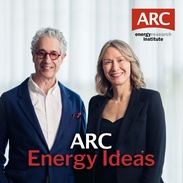
This week, our guest is the Honourable Tim Hodgson, Canada’s Minister of Energy and Natural Resources. The conversation was recorded at CERAWeek in Houston on March 24, 2026.
Here are some of the questions Jackie asked Minister Hodgson: How is Canadian energy being perceived at CERAWeek, particularly in the context of the war in the Middle East? Do you expect that Canada will meet the Prime Minister’s targets of 50 million tonnes per annum of LNG exports by 2030 and potentially double that by 2040? What steps is Canada taking to attract the hundreds of billions in capital required to advance and build major projects, particularly amid strong competition from the United States? With the first deadline for the Alberta–Ottawa Memorandum of Understanding (MOU) just one week away, what progress has been made, and what are the prospects for advancing a 1 MMB/d oil pipeline to access Asian markets? Is Canada fiscally competitive, especially given its carbon pricing and policy framework compared to the United States? And finally, what opportunities lie ahead for Canada in electricity generation growth?
Please review our disclaimer at: https://www.arcenergyinstitute.com/disclaimer/
Check us out on social media:
X (Twitter): @arcenergyinst
LinkedIn: @ARC Energy Research Institute
Subscribe to ARC Energy Ideas Podcast
Apple Podcasts
Amazon Music
Spotify
Episode 319 transcript
Disclosure:
The information and opinions presented in this ARC Energy Ideas podcast are provided for informational purposes only and are subject to the disclaimer link in the show notes.
Announcer:
This is the ARC Energy Ideas podcast, with Peter Tertzakian and Jackie Forrest, exploring trends that influence the energy business.
Jackie Forrest:
Welcome to the ARC Energy Ideas Podcast. I’m Jackie Forrest.
Peter Tertzakian:
And I’m Peter Tertzakian. Welcome back. Well, last week we had a great discussion with Mark Parsons, who is the Chief Economist at ATB. The work on GDP has been posted. It’s interesting, Jackie, that the numbers are big in terms of the contribution of potential pipeline exports, but on the world circuit, particularly Southeast Asia, South Asia, places like India, the situation is really impacted by this war.
When our Prime Minister was in India, I mean, they basically said, “We’ll take as much energy as you can give us.” That was even before the Iranian situation. I know that now with the situation at hand is that we can play a very important role as a country in providing vital resources of all sorts to our allies and those in need.
Jackie Forrest:
Right. Well, so it’s a great time at CERAWeek this week in Houston, where the global energy industry meets. We’ve got the opportunity to hear a lot of the perspectives. We will be sharing some of the themes of CERAWeek in our next podcast, but today we have something special.
Peter Tertzakian:
We sure do. We have the Honourable Tim Hodgson, Canada’s Minister of Energy and Natural Resources, as our guest on the podcast. Unfortunately, I am not in Houston, but Jackie, you’re there and you’re going to do the interview, so let’s cut to it right now.
Jackie Forrest:
Today we’re doing something different. We’re in Houston. We’re at CERAWeek. We’re at the Canada House at CERAWeek. And if that wasn’t exciting enough, we have a very special guest. Our guest is the Honourable Tim Hodgson, Canada’s Minister of Energy and Natural Resources. Welcome.
Tim Hodgson:
It’s good to be here.
Jackie Forrest:
Okay. Well, I know you’ve been doing a lot of talking the last couple of days. Is this your first time at CERAWeek?
Tim Hodgson:
Not my first time in Houston, but my first time at CERAWeek.
Jackie Forrest:
Okay. So tell us, what is your impression of CERAWeek and the conversations you’ve had? I know it’s been a lot over the last, what is we’re on the end of the second day, coming to the end of the second day. How is the conversations going around Canadian energy from your perspective?
Tim Hodgson:
I think Canada’s having a moment in the sun. I don’t know how many of your guests here today were at the large lunch today where the S&P Global Vice Chair and Richard Haas, and the professor from Georgetown who’s intimately familiar with Iran… Show of hands, how many people here were at that lunch?
Jackie Forrest:
Oh, we’ve got like, yeah, a good 30% of the room. I was there.
Tim Hodgson:
If anyone was confused about whether there was a rupture in the world, I think after sitting through that lunch conversation, it was pretty clear. We are in a different world today. We are right now facing one of the biggest energy crisis in my lifetime. I’ve got more gray hair than most of you, so probably in your lifetimes.
The world, as was talked about at lunch, is going to reorder. We have a whole group of major energy producers in the Middle East who have to figure out how they fit into the world going forward. We have many of our allies who today rely on that region for their supplies who have to figure out what does energy security look like going forward? What does national security look like going forward when the very existence of your ability to survive as an economy is a threat?
It’s funny how we get lulled into a sense of complacency. What I found when I started going to Europe is the Europeans really understand this issue, that energy security is national security. The war in Ukraine made it very clear to them. When I talk to my colleagues from Germany, or from Italy, or from France, or from Poland, they will tell you that they were weeks away from their economy shutting down, that they were weeks away from sending kids home from schools because they couldn’t heat their schools.
They’ve had a really difficult time adjusting to a world where they can no longer rely on a hegemon for energy security. Just as we were sort of getting comfortable with that, what’s happened in the Middle East has happened and now not only is Europe reminded of what they’ve gone through, but now our allies in Asia are experiencing the same thing. And so everyone is asking the question, “What does energy security look like?”
Well, it looks like having a stable, reliable partner who believes in free trade, who believes in multilateralism, who when they sign a deal with you will honor that deal, who will not use their energy for coercion, but will use it to unify allies. I’m reminded of that movie where you’ve got everyone lined up standing at attention and the drill sergeant says, “Okay, everyone who’s a reliable energy supplier who will not use their energy for coercion, take one step forward,” and everyone takes a step back.
There’s a couple of people standing there. Well, Canada’s standing there.
Jackie Forrest:
Right. Yeah, and it is our time. I’ve been coming to CERAWeek… I think my first CERAWeek was maybe 20 years ago. I used to be frustrated that Canada had no presence here. Here we are, fourth-largest producer of oil in the world and we didn’t even get mentioned barely. And so, thanks to Anarcan for the great work you’re doing to get Canada’s profile higher, but yes, it’s the times as well that make Canada more interesting.
I wanted to talk to you about our geographic advantage too. You talked about stable supplier and all of these things, but we have a great geographic advantage that’s becoming more clear, and I think we’re underselling that. I was at a session this morning with Chris Wright and he was talking about Alaska oil and gas, and this great shipping distance to Asia, and no geographic pinch points and choke points.
We have that too. Should we be selling that more strongly?
Tim Hodgson:
I think our allies understand. I don’t think it’s an example. I don’t think it’s an accident that in LNG Canada One, the only LNG exporter on the West Coast of North America, has participation from Europeans, from Japanese, from Koreans, from Malaysians, from Chinese. They all understand the shipping distances. They all understand the advantage of sourcing LNG off the West Coast.
I don’t think it’s an accident that when you look at the other facilities that are at either under construction or permitted and getting ready to go to construction, which has a clear line of sight to 50 million tons per annum, which would make us the fourth-largest LNG producer in the world, I don’t think it’s an accident that many of those facilities are buttressed by multinational energy producers like a BP, like a Total, and supported by all the Canadian gas producers.
It’s certainly not an accident that we have been getting phone calls from all of our allies in Asia. The interesting thing is we’re also getting calls now saying, “Hey, you guys have referred Churchill to the Major Projects Office. Are you serious about building LNG out of Churchill? We’re prepared to give you long-term contracts.” The answer is yes, we’re serious.
Jackie Forrest:
Okay. Well, that is good news because Mark Carney, was it in October when the prime minister made the commitment for 50 million tons by 2030 and 100 million tons by 2040? I thought that was a very important signal to send because sometimes it has been confusing if Canada wants to do LNG or not.
Do you think this can happen though, the 50 million tons, and then the 100 after that?
Tim Hodgson:
Well, we’ve got LNG Canada One at 12 million tons per annum. We’ve got cedar and wood fiber, which are another eight or nine. We have LNG Canada Two referred to the MPO and likely to go FID later this year. I think Stacia (phonetic) was at another event and made that statement, so I’m comfortable making that. That’s another 12 million tons per annum.
We have silicium, which is at 12 million tons per annum. We have Tilbury, which is between two and seven million tons per annum. The Haisla are very interested in talking about Biche, and I know the BC government is supportive of that. I know wood fiber has ambitions to double and triple the size of their production. We’re well past 50 just with what we know today. Look, we have this incredible resource in the Montney that is the least drilled major gas play in North America, which has much better economics than…
All the American fields are starting to peak and the productivity of each of their wells is starting to go down. The Montney wells are still going up, and they will go up for some considerable period of time. The world has figured that out, and the world is coming to Canada.
Jackie Forrest:
Yeah. We are at the early innings of our world-class gas play and we have lots of it. Okay, well, we don’t have any shortage of gas, but maybe a shortage of capital is an issue because to build all those projects, including the other ones on the Major Projects Office, are measured in $100 billion plus, and then you got to fill the pipelines too, so there’s even more investment there.
Yesterday, TC Energy CEO, Francois Poirier, said he’s spending predominantly in the United States, and other companies are saying that too. They have this, you’ve been here the last two days, this strong message of energy dominance and doing things quickly here. Considering what we have to compete against, what can Canada do to attract companies like TC or other companies to put tens of billions and hundreds of billions of dollars into Canada collectively?
Tim Hodgson:
Well, I think people are putting money into Canada. I shared with Secretary Wright and Secretary Burgum, we’re excited to help America achieve energy dominance. That’s great. We want to be good partners. Let’s go through the math.
The United States is the largest producer of crude oil in the world. They produce 12 to 13 million barrels a day. That’s awesome. The United States consumes 20 million barrels a day. Produced 12, consume 20. 63% of that difference comes from one place. It’s called Canada. The U.S. gets to get those barrels based on a WCS price, which trades at a discount to WTI. What’s the alternative? The alternative is to source that oil on international markets and pay a Brent price, which is at a premium to WTI.
Every barrel of incremental crude that we help with North American energy dominance is a more affordable fill-up at the gas tank for Americans, is a more affordable ticket on an airline because the jet fuel is made with discounted Canadian crude, and that’s how we can be a good partner. At the same time, we have our allies in Japan, in Korea, in India, all across Asia who are clamoring to get more access to our crude off the West Coast.
We have built and expanded the TMX. We are ready to expand the TMX again with optimization another 300,000 barrels. We are in discussions with Alberta about finding a way to get another million barrels of egress to the West Coast. That’s what our allies want. That’s what we’re going to do.
Jackie Forrest:
How did they receive that message? What was the reaction?
Tim Hodgson:
Great. If we’re helping you, that’s good for the United States. It’s good for us. That’s a win-win. If we’re helping alleviate challenges in supply for our allies around Asia, that’s good for both of us.
Jackie Forrest:
Okay. Well, you mentioned expansion as a Trans Mountain. We had one expansion, but now we’re talking about another expansion of something like 360,000 barrels a day. Could that be fast-tracked? Could we do that even faster to help Asian buyers who are looking for alternative sources? As you say, energy security, diversity is energy security.
Tim Hodgson:
We are doing that as we speak.
Jackie Forrest:
Okay. What’s the timing, do you think, for expanding that 360,000 barrels?
Tim Hodgson:
I’m not sure what’s public or not, but I’ll go out on a limb and say I think the TMX thinks they can have that incremental 300 plus thousand barrels in place by 2028.
Jackie Forrest:
We are fast-tracking projects now. You have the Major Projects Office and the Bill C5, which is saying that I think two years to do an environmental review. Now, some people acknowledge that, but argue we still need to be going faster. We don’t see shovels in the ground yet. I mean, you’ve been a government for 10 months already. What do you say to those people?
Tim Hodgson:
I’d say if you look at the 15 projects we’ve referred to the Major Projects Office, 15 different projects, $126 billion of new investment. We’re doing pretty well. I would say many of those already have shovels on the ground like the foreign copper mine, like the Darlington Nuclear, the SMR bill, like the Port of Montreal. We expect by early 2027, I think seven to eight of those projects.
Remember, the first one was referred in September. Seven or eight of those will have shovels in the ground and being operating. Again, we said if we refer it, we’ll get there within two years for a conditions document so people know what they need to do to build. The Prime Minister is a KPI type guy. He’s been very clear. He expects us to attract $500 billion of private sector investment, two infrastructure projects in Canada by the end of the decade.
In the seven months since the MPO stood up, we’re at the 125, 126 billion. I think we’re going to get there. I’m reticent to say that because I know he’s going to raise the target on me, but that’s the level of ambition that we have right now.
Jackie Forrest:
Right. Well, and even those two LNG projects you talked about collectively are like $60 billion, and that doesn’t include the upstream investment associated with all the gas at in the Montney, as you talked about.
Let’s just touch on carbon policy. We’ve got the MOU, and part of that is to get some agreement with Alberta on the carbon taxes. I think $130 was put in the MOU. The idea of building a large carbon capture storage project linked to getting a pipeline built, or even start the process anyway for building a one million barrel a day pipeline to Asia.
April 1st is one week away from today. What can you tell us about how that’s progressing and do we expect that we’re going to move forward with this oil pipeline?
Tim Hodgson:
I don’t know how many people were here at Canada Host earlier today when I was beside Premier Smith, who said it’s really important to future-proof our industry in Canada. Part of future-proofing our industry is delivering an environmentally responsible product that stands the test of time. We know ultimately the world is going to get to net-zero. We need to future-proof our industry.
Part of doing that is having a carbon price that encourages the continual improvement in the carbon intensity of our barrels. Canada has been a world leader in reducing the carbon intensity of our barrels. As we continue to do this, we are future-proofing our industry. That’s where the federal government and the Alberta government are in agreement. So now we have to get to what does that look like? We’ve got a game plan.
In the MOU, there are five different work streams that are going through. We are heads down working constructively together. We know what the end goal is, what the objective is, how we get there. We’ve already announced one of those work streams. I think there’ll be something very shortly on another. The way I look at it, I’ve done a lot of deals in my career, if both parties have their head down and say, “We’re going to get to April 1st and we’re going to have this done,” you work as hard as you can.
And when you get to April 1st, you say, “Hey, we’re a day away. We’re a week away. Do we keep going? Do we keep our heads down?” You look at the other person on the other side of the table and you say, “I think you have the same objective as me. I think you’re committed to working on this. Let’s keep working.” So I’m not concerned. We are working really hard. We’ve already hit some of the objectives and they’ve been announced.
The one project, one review is huge with Alberta. Premier Smith mentioned something about methane earlier today when she was here, so that’s her prerogative. We are on a good path. We are heads down working hard. I am highly confident if for some reason on April 1st we’re not completely done, we’re going to look at each other and say, “We’re close, keep going. Let’s get this done.”
Jackie Forrest:
Okay. So signaling there could be delay, but don’t read that that isn’t a good sign, that you’re still working together?
Tim Hodgson:
Signaling that there is complete commitment to the shared goal that’s laid out in the MOU, which I want to be clear, isn’t just about a pipeline. It is about a total solution. It is about how Alberta delivers on renewables. It is about how Alberta is a world leader in carbon capture and storage. It is about how Alberta builds the interties so that it can develop nuclear and put that into its base load. It is a comprehensive agreement on how Alberta contributes to being a clean and conventional energy superpower in the context of United Canada.
Jackie Forrest:
Okay. I do like that superpower framing. Let’s say I’m a global energy investor. There’s lots of them walking around the conference, and they come to one of these sessions on Canada and they hear that we have carbon tax and we need the CCS project, and they start to say, “Well, the Americans don’t have any of that. It’s a cost to do that.” Well, I still get the returns that I want by investing in Canada.
Should they be concerned by the costs that that’s going to create? Are we going to be… We talk about carbon competitiveness in Canada, but are we going to be fiscally competitive while we do that?
Tim Hodgson:
Absolutely. We’ve done the work with the province of Alberta. We’re working with industry right now. Look, Canada is sitting on an incredible resource. I’ll give a shout-out to Newfoundland as well. Newfoundland got Bay du Nord going, the lowest emission offshore production in the world. That’s going to be a fantastic project.
But back to Alberta, you’ve got the fourth-largest reserves in the world, zero finding and development costs. In a world that is now desperate to find a reliable source of energy, and where we have driven down the cost of producing that because it’s a factory and we get more efficient every year, and we reduce the carbon intensity every year. Well, other countries’ production, the cost structure is going like this.
The cost structure of the Alberta oil stands is going like this. We are confident we can deliver through the Pathways Project a very competitive barrel that Canadians can be comfortable as the cleanest, lowest intensity barrel it can be. That will be competitive in a world where other countries are seeing their costs go like this.
Jackie Forrest:
Okay. For those, the Pathways Projects is the large CCS project that’s linked to the pipeline. We’ll probably be hearing more about that.
Tim Hodgson:
It will be the largest carbon capture and storage project in the world. It’ll take 16 million tons per annum of carbon out of our production. It’s the equivalent of taking five million cars a year off the road, and it will step change the carbon intensity of an entire industry. It will give us technology that we can export around the world.
It was really interesting. Premier Smith was sitting here saying, “Guys, many countries don’t have a carbon price, but they’re doing this.” Saudi Arabia is investing hugely in carbon capture and storage. They want to future-proof their barrels too. They are looking at our technology. They want to see our technology. Canada has, I think, the second-largest number of startups in carbon capture and storage in the world.
This is a technology the rest of the world is going to want. As we develop it, we can export it around the world. That creates great jobs for Canadians. That’s why Premier Smith, and we, believe it’s important to future-proof our industry.
Jackie Forrest:
Okay. Well, let’s talk about indigenous discussion that when you go to these Canadian sessions, you hear a lot about having to work with indigenous partners. By the way, I see it as quite positive, but for someone who just walks into the room looking to invest in this country, in Canada, it might seem like very complicated.
Maybe pretend I was the investor that doesn’t know much about Canada and they’re concerned that this is going to create friction, and harder to get the project done, and maybe even they could stop your project going forward. What would you say to that concern?
Tim Hodgson:
I would say you were watching yesterday’s movie. I’ll give you an analogy. It’s a real analogy. I became Chair of the largest publicly traded transmission and distribution company in Canada, Hydro One, based in Ontario. When I became Chair of the company, Hydro One had not built a new transmission line in 10 years. Why was that? Because we were fighting with First Nations.
We said, “Let’s change the paradigm. Let’s move indigenous engagement from a risk factor to a strategic imperative. Let’s take it from an afterthought to before you do anything, before you come to me to talk about a single dollar investment, tell me what your strategy is to make First Nations and Indigenous peoples your partner.” What happens when you do that?
Well, fast-forward seven years, Hydro One is building more transmission lines in Ontario than any other jurisdiction in North America. Those transmission lines are coming online ahead of schedule and under budget. Ahead of schedule and under budget. Why? Because every environmental review we go to, every permitting, every community engagement we go to where we start talking, our First Nation partners were beside us saying, “How quickly can we build this? Because we’re really looking forward to our equity check.”
These revenues give us sovereignty. These revenues give us our own source revenues so we’re no longer standing, waiting for a distribution from the government. This is empowerment. We want these projects. If you’re not doing these projects to me, but you’re doing these projects with me, I’m a great partner. That’s a real life example of what’s happening right now in Canada on the electricity side. I know in Alberta, Alberta’s been doing that for quite some time.
You’ve got the Alberta Indigenous Opportunities Corporation, which has, I think, put out close to $1 billion in equity participations and has done a great job of bringing that same attitude to oil and gas. And look at what’s happening in LNG. In all of those LNG projects that I talked about, they are being led in partnership with First Nations. That’s a game changer. That’s why we’re building now.
So you’re watching the wrong movie. That was last year’s movie, or a decade ago. The movie today is if you work in partnership with First Nations, your projects will get done faster and cheaper.
Jackie Forrest:
No, that’s a great story to tell, to explain it because it really does reduce the friction. Well, let’s talk about electricity. We’ve got a lot of opportunity for growth in generation in Canada. I think Canaria, which is a renewable energy association, is talking about 24 gigawatts of procurements across the country for not just renewables, but for all types of energy.
We have the big nuclear projects in Ontario. We have a talk of a big wind project in Atlantic Canada, the potential to expand the Churchill Falls. Maybe share a little bit about your thoughts around the opportunity for Canada in terms of economic growth and building all of these projects.
Tim Hodgson:
Sure. The Prime Minister has been very clear. If Canada is going to realize its potential, we need to be an energy superpower. He’s very specific. We need to be a clean and conventional energy superpower. It’s not one or the other, it’s both. He also has a saying, which he used at Davos where he said, “We need to engage in the world as it is, not as we wish it to be.” The world that is, is there will be a role for conventional energy and clean energy.
If we are going to be a superpower, we need to be the best at both. That is our objective. We’re very clear about that. In the MPO, we are very clear. We are going to be best in class in clean energy, whether that’s wind, whether that’s solar, whether that’s grid storage, whether that’s nuclear, and we’re going to be the best we can be in conventional energy. We are going to produce the lowest carbon intensity emission LNG in the world, and we are going to produce the lowest carbon intensity barrels of crude oil that Canadians can produce.
When we do that, Canadians say, “Hey, this is great. We’re helping our allies.” We’re putting cards in our hands, and we’re generating the revenues that pay for the lifestyle that Canadians want, that pay for the universal healthcare that we have, that pay for the pharma care that we have, that pay for the dental care that we have, that pay for the subsidized post-secondary education that we have, that pays for the $10 a day daycare that helps families have two income earners.
When we show Canadians that we’re doing the right thing and we’re developing our resources the right way, and that’s helping our allies and that’s helping us, Canadians say, “Let’s go. ”
Jackie Forrest:
Yeah. I will tell you, it’s certainly refreshing to have a Prime Minister and Energy Minister like yourself talking about being an energy superpower. That goes a long ways. You have been busy selling Canada not only here at CERAWeek in Houston, but since you’ve come on in the last 10 months, I think there’s been 12 trade deals signed, I believe, by your government.
Tim Hodgson:
19.
Jackie Forrest:
- Okay. It’s going up. I might’ve got a dated number. It was from last week. Just tell us a bit about those conversations, even before this Iran situation. What are the products that are rising to the top of the list? Is it the oil and gas? Is it the critical minerals?
Tim Hodgson:
The Prime Minister talks about a hinge moment. He talks about a rupture. What we are seeing is the world is becoming a more dangerous place. We’re very fortunate. We’re in North America. It’s something we watch on the news. In other places, it’s very much more tangible. I talked about what happened in Europe after the invasion of Ukraine. If you talk to our allies in Asia right now, they will tell you this is not a theoretical, something they’re watching on TV or on their phones.
This is real, so we need to deal with that reality. Our allies, they see us as a solution and we can’t miss this moment. This is our moment. This is our moment to lead. And so, what I see around the world is people say, “Hey, we understand what you have to sell. We need what you have. How do we work together?” The Prime Minister gave, some of you will have seen the speech in Davos, he gave a speech to the Australian Parliament a couple of weeks ago.
He gave a speech at the Lowry Institute in Oster where he talked about how Canada helps take multilateralism to the next evolution, how we build like-minded alliances on different topics with our partners around the world, and how we use our energy and critical minerals not as a coercive force, but as a unifying force. I think our allies all over the world see that as a positive thing. I think Canadians see that as a positive thing and they see that as something that they want Canada to do.
Jackie Forrest:
Well, we are running out of time. I think that’s a great way to end it on that “We’re open for business. This is our moment,” kind of leave me with that takeaway. I really want to thank you for your service and representing Canada. Like you say, this is a time of great opportunity for the country and we really appreciate your leadership. I know there was a lot of other things you were doing before, but I’m glad you stepped up for this big job. So thank you, Minister Hodgson.
Tim Hodgson:
Thank you.
Peter Tertzakian:
Well, that was a great interview, Jackie. We’ll have a lot more to say about this and a lot more follow up on CERAWeek as in the podcasts to come. This story is not going away in terms of how the war is going to affect the globe, and indeed what Canada can do to help, again, our allies and friends around the world.
Jackie Forrest:
It’s a wrap. If you enjoyed this podcast, please rate us on the app that you listen to and tell someone else about us.
Announcer:
For more ideas and insights, visit ARCenergyinstitute.com.

