What Is Canadian Carbon Competitiveness?
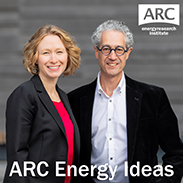
This week on the podcast, Jackie and Peter are joined by Marcus Rocque, Vice President of Research at the ARC Energy Research Institute. This episode focuses on Canadian federal carbon policy, including a discussion of the carbon pricing policy for large industrial emitters and the recently finalized methane regulations, which target a 75% reduction by 2030 (relative to 2012). The discussion centers on how these policies affect competitiveness, investment, and infrastructure development in Canada’s natural gas and oil sector.
They start by discussing Prime Minister Carney’s recent speech at Davos. Next, they review recent developments in Canadian carbon policy, including the Canada–Alberta Memorandum of Understanding (MOU) signed on November 27, 2025, in which both governments agreed to work toward an oil pipeline to reach Asian markets. The MOU also outlines a plan to develop a revised industrial carbon pricing policy and methane regulations by April 1, 2026. Not long after the MOU was signed, in December 2025, Environment and Climate Change Canada (ECCC), a federal agency, issued final methane regulations that conflict with the MOU, with one requiring an end date of 2030 and the other 2035. Further to this, ECCC released a discussion paper in December titled “Driving Effective Carbon Markets in Canada”, asking for feedback by January 30, 2026, on potential changes to Canada’s carbon markets, which are also being modified as part of the Canada-Alberta MOU by April 1.
Jackie, Peter, and Marcus discuss what “carbon competitiveness” means and how Canadians should think about it in a changing global energy landscape. They also share concerns about the carbon market discussion paper and new methane regulations.
Content referenced on this podcast:
- Discussion Paper: Driving Effective Carbon Markets in Canada. Send your feedback to ECCC before January 30, 2026, by emailing: tarificationducarbone-carbonpricing@ec.gc.ca
- Final Methane Regulations: Canada Gazette, Part II, Volume 159, Number 27
Please review our disclaimer at: https://www.arcenergyinstitute.com/disclaimer/
Check us out on social media:
X (Twitter): @arcenergyinst
LinkedIn: @ARC Energy Research Institute
Subscribe to ARC Energy Ideas Podcast
Apple Podcasts
Amazon Music
Spotify
Episode 311 transcript
Disclosure:
The information and opinions presented in this ARC Energy Ideas podcast are provided for informational purposes only and are subject to the disclaimer link in the show notes.
Announcer:
This is the ARC Energy Ideas podcast, with Peter Tertzakian and Jackie Forrest, exploring trends that influence the energy business.
Jackie Forrest:
Welcome to the ARC Energy Ideas Podcast. I’m Jackie Forrest.
Peter Tertzakian:
And I’m Peter Tertzakian and welcome back. Well, let’s see. Cold weather, post Davos followed from speeches, tariff threats, carbon policy, beating into the memorandum of understanding in April. I don’t know. I wonder if our audiences have five hours to spare for this podcast, Jackie.
Jackie Forrest:
Yeah. What happens in a week or two is unbelievable these days.
Peter Tertzakian:
Yeah.
Jackie Forrest:
But let’s start with the cold weather, which has caused crazy high prices for gas. We’re recording January 26, and this morning the cash spot price for Henry Hub was $22 per MMBtu, eight times the level of a couple of weeks ago. Crazy.
Peter Tertzakian:
I thought it peaked around 70 or something at the [inaudible 00:01:02].
Jackie Forrest:
I heard there were some hubs maybe that got that high, but here in Western Canada, not so much.
Peter Tertzakian:
No.
Jackie Forrest:
We have prices in the low $2 Canadian per gigajoule, which is less than 10% of the price in the US. So we still have this story of really terrible gas prices here in Western Canada, even when we get these very cold weather systems.
Peter Tertzakian:
Yeah, it’s a constrained pipe situation for sure. And that’s why we need more LNG access to the West Coast to be able to get global prices, especially when it’s really cold.
Jackie Forrest:
Okay. But also big news, obviously Mark Carney’s speech at Davos. What’d you think about the speech?
Peter Tertzakian:
I thought it was awesome really. And I think the world took note. People are still talking about it a week after he gave that speech. I mean, I’m noticing more and more op-eds in international newspapers, which I read. So it was really repeating what we’ve talked on this podcast for a long time. We’re in a new world. We’re in a new world and we need to wake up to it and we need to think alternatively. And I think that idea of we’re in a new world where there is economic warfare and leading into corollary statements like the middle powers have to team up and so on and so forth.
But I think this recognition so clearly of the rupture, which is like, okay, this isn’t a gradual change, this is an abrupt change into the new world is important because we can’t hang on to the past. We have to think about this completely differently. And we’ve talked about geo-economics and mercantilism and so on and so forth. And the fact that free trade and state capital… Free trade is yesterday’s news, state capitalism and mercantilist interventions are new. I mean, these are all part of it.
Jackie Forrest:
Well, I agree. It was a great speech, but of course there was blow back. And we saw over the weekend, Donald Trump goes back to calling Mark Carney Governor Carney. I don’t think he’s actually called him that. It was Governor Trudeau before. He doesn’t want Canada to be a drop off point for China to send their goods to the US and he threatens 100% tariff on Canada if we make a trade deal with China. And Carney had responded over the weekend that there is no plans for a free trade deal with China. So hopefully this will just blow over, but certainly a U-turn. Trump initially praised Canada for the visit to China, so obviously didn’t maybe like the speech at Davos and the reaction that came from that.
Peter Tertzakian:
Well, I think it was largely a verbal blow back because the markets didn’t respond to any of it really. A year ago, tariff talk led to devaluation of the Canadian dollar. Today, basically looking at it this morning, which is nothing gets strengthened because people are actually thinking about moving away from the US dollar globally.
Jackie Forrest:
CBC called it a tariff tantrum. So it’s definitely different than what they talked about it a year ago when there were threats. These events though, along with Venezuela, Greenland, and we haven’t talked about Greenland, it definitely got escalated, but now there’s some sort of framework deal, but it’s still quite uncertain how the US involvement in Greenland is going to evolve. To me, it makes it even more urgent that Canada builds this infrastructure, whether it be the oil pipeline or the natural gas pipelines or other port infrastructure to sell everything we have more to global markets.
Peter Tertzakian:
But the prerequisites for that is cleaning up carbon policy because a lot of this infrastructure, whether it’s oil and gas or otherwise, still has to overcome regulatory and policy hurdles.
Jackie Forrest:
I think you’re right. And November 28th, which by the way, when we had that MOU signed between Alberta and Ottawa, it feels like a long time ago, almost like another world ago. And to me, it’s even more important that we get that MOU in place, we get this oil pipeline on track. But at the same time, there’s been a lot of new carbon policy come out. And the MOU actually talked about by April 01, clarifying methane requirements and carbon pricing. But then over the last, really in December, Environment and Climate Change Canada, ECCC, sends mixed signals by looking for more stringent greenhouse gas emissions policy for industrial emitters. And so to me, a little bit of mixed signals here because the MOU said we’re going to have some new stuff by April 01, but now we have these other competing documents on the same policy with different objectives.
Peter Tertzakian:
All right. So we’re going to use this podcast to talk about all this carbon policy and we’re delighted to bring back another third time guest, not really a guest, more like a colleague. And we’re delighted to have back from the ARC Energy Research Institute, Marcus Rocque, he’s a VP of Research over there. He works closely with both Jackie and I. So welcome back, Marcus, because you’re our policy guru who digs deep into the numbers.
Marcus Rocque:
Yeah. Thanks, Peter. And thanks, Jackie. Really excited to be back for the third time and happy to talk about carbon policy. I think it will be more technical policy or a podcast than many of them, but I think it’s really important topic. So excited to talk about it.
Peter Tertzakian:
So let’s start right at the top with some definitions because I like to clarify definitions. There’s this word that gets bandied about called carbon competitiveness. So what does that really mean to either of you two?
Jackie Forrest:
Well, I’ll start. And I think everyone I talk to has a different definition, so it’d be nice to get some clarity here. But I think it’s that our carbon policy is competitive with other jurisdictions in that we don’t get so far in front of everybody else that now suddenly our projects have this big burden of carbon pricing that maybe will cause people not to want to come here and build projects. We want to build all this infrastructure. We want to grow our oil and gas production now. It seems to be a goal of the federal governments, but at the same time, if our carbon policy is so stringent, it may reduce the amount of people that want to build their projects here.
Peter Tertzakian:
Okay. But I mean, that gives me some qualitative sense, but how do you numerically say? Because I can tell you from the perspective of business competitiveness, you measure quantifiable numbers like say comparing operating costs, margins, profit margins, and so on. From a capital competitiveness, the ability to attract investment capital, there’s things like the hurdle rates, the cost of capital, the cost of debt, so on and so forth. What is the metric by which we measure carbon competitiveness? Marcus, is it carbon intensity?
Marcus Rocque:
Yeah, I think carbon intensity is definitely one factor that you can look at if we compare how many emissions are associated with a barrel of our oil versus a barrel of a competitive oil. If you look back a few years ago, there was this view that having the lowest carbon barrel might get you a higher price on the global markets, the so called green premium. I think in a lot of areas that view has really dissipated and people aren’t seeing those green premiums materialize. So I think there’s a question of, you can call that carbon competitiveness, but does it actually make your barrel more competitive in a real financial sense? I think it’s an open question.
Peter Tertzakian:
So Jackie, do people pay more for a green premium?
Jackie Forrest:
I have not found anyone that tells me that they do, but I have heard some people say, “Certain buyers may see that as a positive attribute and maybe lean more towards buying your product over another one.” But carbon intensity isn’t the only thing to look at in this world where we’re trying to attract more investment into our country to grow our economy. Because to me, if the burden of the carbon policy is such that the returns for the project are worse than somewhere else, and I’ll give you the one example that I’ve used before. But if you look at going to $170 per ton by 2030 with the stringency that BC is talking about going up each year, it works out to about 50 cents US per MMBtu you for our LNG.
And so LNG sells for about $10. The profit is about a quarter of the value of the LNG, if you look at some of the US suppliers who publicly put out information about what their costs are, so we’re talking about a quarter of the profit being given away to carbon tax. But if you go do the project in US, you keep that quarter of the profit. I think that’s not competitive anymore. So I think we have to look at, are our returns competitive? Are we going to attract a company to come build a project here instead of the US Gulf Coast?
Peter Tertzakian:
So you’re putting carbon competitiveness directly back into what I call business competitiveness by translating it into an operating cost. And if you could actually charge 50 cents more, then arguably it’s a wash or 50 cents or more for this feature. And by the way, that’s the way I think about it. I mean, being a green barrel or a green cubic meter of natural gas is a feature. It’s like features in any other product. You can look like a long list of features. Let’s just take a barrel of oil, say it’s got high energy density, it’s robust in its applications, you can use it in small engines to large engines. You can use it in all sorts of different applications. It’s easily transportable and the whole laundry list of features. And so being a green barrel, in other words, a low carbon intensity barrel or a no carbon intensity and production barrel is a feature.
People don’t necessarily pay more for features when they compare different products, say an iPhone versus a different kind of phone. They just compare features and say, “Okay, this bundle of features I will pay for a little bit more, a little bit less, or no more.” And I get the sense that it’s a nice to have feature for some customers, say the Japanese, but they’re not necessarily willing to pay more for the feature because they’re looking at all the features of all the products comparative between the different sources of oil or gas.
Jackie Forrest:
Yeah. And I think it’s important to think about that as we go into our conversation. If no one’s willing to pay more, if it means that a project in Canada can’t compete in terms of returns, it may mean that they just build more projects in the US and that’s not what we want right now. We want to attract desperately more projects to be built here to grow our economy, to expand the export markets for our products. So let’s keep that in mind as we go through the two topics today.
Peter Tertzakian:
I think we have to.
Jackie Forrest:
Yeah.
Peter Tertzakian:
And this notion of treating these things as products is really important because a barrel of heavy oil with its carbon intensity is very different from a barrel of light oil with its carbon intensity. And in a way, if you think about other products, say we don’t compare the emissions of a dump truck to a motorcycle and apply the same kind of thinking to that. So when we think about competitiveness, we got to make sure we’re comparing the same barrel to barrel or cubic foot to cubic foot or whatever the hydrocarbon commodity is.
Jackie Forrest:
Okay. Yeah, I agree. So well, let’s talk about the two topics. One is this discussion document that came from ECCC right before Christmas, and they are asking for feedback on this discussion document right away here on January 30th, so the end of this week. So we will encourage people that are interested in this topic to write something in, even if it’s an email. We will put some information in the show notes in terms of where you would email the feedback to by January 30th, which is this Friday.
Okay. So a bit of information about the discussion paper, it has a number of facts that we’ve talked about many times on this podcast, but I think they’re important. There’s 10 carbon pricing systems in Canada and under the Greenhouse Gas Pollution Pricing Act, Ottawa insures large emitters face a carbon price and that provinces can run their own system if Ottawa deems them as equivalent. And seven provinces have gone ahead and done their own thing. Four use the federal system. And of course, Quebec always has to do something different. They do something quite different than the rest of the country with a cap and trade program. But for the rest of the provinces, they use what is called an OBPS. What is an OBPS, Marcus?
Marcus Rocque:
So an OBPS is an output based pricing system. So essentially, instead of exposing an industrial facility to a carbon price on all of its volumes of carbon, you set an emissions intensity benchmark. So facilities that are above that benchmark are going to have to either pay into some sort of fund or buy credits and facilities that are below can generate credits that they can sell to others. The idea is here is that you don’t expose facilities to the full cost of a carbon price. So you don’t necessarily have as much carbon leakage where you’re sending industry to other markets instead of developing it in your own jurisdiction, but you still expose the companies to a high carbon price that should incentivize emissions reductions.
Peter Tertzakian:
And you try and tighten up that benchmark. Isn’t that one of the features over time?
Marcus Rocque:
Exactly, exactly. There should be a ratchet over time in order to continue to incentivize more and more emissions reductions and also to keep prices high, which is a big focus in this discussion document that we’ll get into.
Jackie Forrest:
Yeah. Let’s talk about that. So one of the critical requirements, according to the discussion paper, is that you do need to keep tightening each year because if you don’t, then the market would become oversupplied because if you didn’t keep requiring more and more emissions to fall under the system, then there wouldn’t be a tight market and the prices could drop. So the main problem this document’s trying to solve is keeping price high. In fact, I looked at the document. Price is mentioned 122 times in this document, but emissions reduction is mentioned eight times. So the whole thrust of this document is to recognize that we want to keep the price high, and what are we going to do to keep the price high? And sometimes I think it loses sight of the real goal here, which is emissions reductions.
Peter Tertzakian:
Well, isn’t it beyond even keeping the price high? It’s trying to keep the price ratcheting up to that originally intended $170 a ton by whatever it was, 2030, right? That’s the intent. And that ratcheting up these OBPS targets is equivalent to trying to control the market to keep that price ratcheting up, which in my view is absurd because trying to control a market defeats the purpose of a market in many ways. It’s market manipulation if you really think about it. It’s not a free market. And I think that one of the things, I want to go back to this 10 carbon pricing systems in Canada. When the industrial carbon tax came out, they allowed provinces, as you said, to come up with equivalencies and basically broke up a national carbon market into 10 separate markets.
I think it’s impossible now to put Humpty Dumpty back together again just because now each of these markets, many of them are not liquid enough to be able to bring in these market guiding mechanisms to achieve the pricing. You’re either going to overshoot or you’re going to be too low and too high. And it seems awfully arrogant that you could focus so much on price and control price with these mechanisms in illiquid markets where you have big surges of credits coming on or like… I don’t know.
Jackie Forrest:
Yeah. I mean, I think the root issue here is that we have too small of markets and we could do a lot to create stability in price if we had one Canadian market. But interestingly enough, that is not in scope for this document. This document says that there is potentially other interesting things that could be done, but they’re not going to cover that because that’s up to the provinces to figure out. And the government of Canada could work with them, but that’s not a solution that they feel is open to them. But I want to come back to the stringency because they are putting forward some ideas about how to keep the price high by adjusting the stringency. They’re really trying to get at the fact that some markets, and they don’t name names here, but some markets like Alberta are quite a bit low pricing right now, like 30 to $40 per ton is the current price in the Alberta carbon market when, as you know, the headline price, what is it supposed to be as of 2026?
Marcus Rocque:
So as of April 2026, it should be 110.
Jackie Forrest:
Okay. So the whole goal of this document is how do we prevent that? And so they have a number of ways that they’re suggesting that they’re going to work with the provinces or maybe even monitor the provinces much more strictly. So they have some tools they propose to add new requirements that the province must manage the market and keep it tight. And they’re calling them net demand buffers, but there’s three ideas here. They will just dynamically adjust the stringency whenever the market is oversupplied. So if you’re a polluter or you’re creating GHG emissions, right now you know that every year it’s going to go up here in Alberta 2% per year and in other provinces and maybe there’s a different way to do it, but you can forecast five years from now what your carbon cost could be.
What they’re saying is, “Oh, suddenly now the market is too loose like in Alberta, so we might just go up 7% this year or 5%.” So now the polluter has no way to prepare for what the carbon prices in the future could be. That’s one idea. So that’s really the industry has unpredictable situation. The next one is there could be credit purchasing policies where the taxpayer or the government, but really the taxpayer just starts buying up these additional offsets because they’re oversupplied. So to tighten the market, you could just get rid of them. Or you could have laws that require price floors, which also doesn’t really create a free market. So all of these ideas to me either cost industry and make the system unpredictable for industry or they cost the taxpayer. And I don’t see any of them as really ideal.
Peter Tertzakian:
But let’s get back to a fundamental question. And I know, Marcus, you’re an economist by training as well. Why is oversupply a bad thing in this context? Doesn’t that actually tell us that there are a lot of carbon credits available, so we are decarbonizing? In fact, an oversupply of credits is indicative of decarbonization, and therefore we should interpret low prices is actually a good thing.
Marcus Rocque:
Yeah. I mean, I think it’s a really interesting point to think about that the low prices might not be a failure. They might be a sign of the success that we’ve had. And if we think from a fundamental economics perspective of why you want to have a tradable carbon market anyways, it’s so that the lowest cost projects are the ones that occur. You incentivize companies who have really good opportunities to reduce their emissions to do so and then sell those offsets to people who maybe had a higher cost of abatement and weren’t able to do so. So the price is transacting at a low level. While it may not incentivize as much reduction in the future, it’s probably a sign that there actually has been a lot of low cost reductions occurring to date.
Peter Tertzakian:
Yeah. I mean, talk about where this oversupply is coming from. It’s coming from presumably solar farms and all sorts of other renewable energy sources. And the fact there is an oversupply tells me, “Okay, we’re building this stuff faster than we expected.”
Marcus Rocque:
Yeah. In Alberta, certainly a lot of the credits are coming from the wind and solar boom that we’ve had in the last several years. A number of credits are also coming from methane reduction offsets. So companies getting at their methane reductions faster than they would’ve otherwise. So arguably it has been a good news story.
Peter Tertzakian:
So Bravo. And why are we having 122 mentions of trying to crank up the price artificially when it strikes me the market’s working in the way that we want it to?
Jackie Forrest:
Well, and it’s interesting. Now, Alberta has proposed some changes, but in the absence of those, and we can get to those, a lot of forecasters show that it would’ve naturally tightened in the next five years. So the market would work. It isn’t oversupply, but we won’t have as many actual reductions as we use up those offsets, but the markets do work. If you want a firm price, why don’t you just go with a straight carbon tax? If that’s what you want, then that’s the mechanism to use in my view.
Peter Tertzakian:
Well, I agree. I mean, this idea of manipulating the market with all sorts of machinations that, as I said, I think are quite arrogant to think you can control it, especially in fragmented illiquid markets where you get sudden bursts of supply when big projects come on. It strikes me as being absurd. And my personal view is that we need to rethink this whole thing, if not scrap the whole idea of the carbon market and just go to something clean and simple that everyone understands because the way I read this document, this one where we’re supposed to comment on, it’s a lengthy document of complexity. Why can’t we just simplify it, as you just said, put in a reasonable timeframe by which industries need to decarbonize. And if you want to encourage other industries such as renewables to accelerate even faster, fine, put in programs for those such as tax credits and things like that, that other jurisdictions in the world have done.
Jackie Forrest:
The thrust of this is we want some very firm pricing and you want it across the country, maybe carbon tax where you recycle the carbon tax money into clean energy. Now, I know that won’t be popular for a lot of reasons, but if that’s what you want, firm price, if that’s the most important thing, because the root cause of why the prices are volatile is because the markets are all too small and this document isn’t addressing the root cause, which is actually, we should just have a much bigger market. And if we’re not willing to do that, I question, these are like putting bandaids on a broken system. They’re not really solving the root cause, which is too small of a market to really function properly.
Marcus Rocque:
Yeah. And I would point out that in the budget, the government did have a nod towards potentially linking carbon markets. And in the preamble to this document, they mentioned that again, but there’s no concrete plans to really do so. So to your point, it is a bandaid on a broken system. One point I did want to make as we talk about price is also just a general question of, is $170 the price? That is really optimal. We’ve been living with this price for a long time. And if you recall, it was really from Trudeau era modeling that was developed on what we actually needed to really align with net zero, but a lot has changed in the world since then. I mean, we talked about Carney’s speech at the beginning. I think you guys on the podcast have talked a lot about changing priorities around net zero.
Is 170 still the price that really has the right balance of fostering decarbonization here, but also retaining some competitiveness with other jurisdictions that have stepped back on some kind of an issue?
Peter Tertzakian:
170, forget 170, even 130 is quite prohibitive to big industries like oil, gas, and I would venture to say things like steel and other emitting industries. And if it’s just creating a cost and bureaucratic burden, then it doesn’t make us very business competitive at a time when we want to increase our exports and diversify our markets, especially away from the United States where we are now subject in certain industries under very steep tariffs like steel, aluminum, et cetera. So I just don’t see these numbers as being realistic. And I think further to the prime minister’s comments, take the world as it is today rather than the world as you wish it to be and we’ve undergone a rupture and we need to think differently. Yeah, we need to think differently about all this stuff.
Jackie Forrest:
Yeah. And come back to, we won’t cover every industry, but that LNG example, I don’t think 50 cents per MMBtu US-
Peter Tertzakian:
That’s huge.
Jackie Forrest:
… is the right number because that’s what 170 translates with the current step up in stringency. And that’s before we start wildly adjusting stringency to keep the price high, which is being proposed in this document. So I think it was a different era back then, and we need to look at what do we need to do. Number one is to attract capital here to get projects built. The Americans, they have made final investment decision on several LNG projects in 2025. We haven’t. They don’t have any carbon tax. What are we doing to make people have final investment decisions here in this country instead of having the Americans continue to build more and more LNG projects when we aren’t? So we have to think of the big picture.
Peter Tertzakian:
But [inaudible 00:24:08], I really think we have to come back to, it’s not just the American situation, it’s also that internationally nobody is paying for the premium to offset the cost and that the rest of the world is recognizing that the geopolitical, geo-economic issues supersede everything else at the moment. And if you are going to aggregate middle powers, as Carney is talking about, then being cost competitive and export competitive is just paramount.
Jackie Forrest:
Okay. I want to talk about a few little details because they do rub me the wrong way here, but then one of the things that’s being proposed is that they increase the number of facilities covered under the program. So today, Alberta only taxes facilities that are 100,000 tons per year of emissions. And this document’s actually proposing reducing that to include more facilities. Possibly the cutoff would be 10,000 or 25,000 tons per year. And that would mean that a whole bunch of very small oil and gas producers who currently don’t have to deal with the administration and all of that stuff now have to start participating in this very complex market. Marcus, I don’t know if you’ve got the numbers there, but they don’t actually have very many emissions. So we’re creating all this complexity and we’re not going after many additional reductions.
Marcus Rocque:
Yeah, for sure. I mean, so the theory of what they’re trying to do here is lower the threshold so more facilities are in the system, so more demand for these offsets and it’ll drive prices higher. But if you look at the actual numbers, I mean, they’ve given the two options. One is, as you said, reducing to 25,000 tons as the facility emissions that would allow you to be involved in the system. The other is 10,000 tons. If you look at the difference between those two, going from 25 to 10 would only cover 1% more of Canadian emissions. So still a relatively small portion of emissions, 38% of the national emissions versus 39, but doing that is going to add over 600 new facilities and actually extend coverage to 52 new industrial activities that weren’t being regulated under carbon pricing before. So to your point, it’s fairly small new emissions that are falling under the system for quite large compliance and regulatory burden for the companies that are now-
Peter Tertzakian:
Well, and the government, I mean, you have to monitor this stuff at a time when the civil service is being cut back. So it doesn’t make a lot of sense to add this bureaucracy for minimal impact.
Marcus Rocque:
Yeah. Well, and one other thing that I should highlight is they did touch on the idea of having an even lower threshold for oil and gas companies. And the idea here is that a lot of oil and gas companies have many small facilities that theoretically could be considered as one. But if you look at these thresholds, I think people don’t have a good sense of what 10,000 tons is. That might sound like a large number, but that triangulates at the average emissions to a oil and gas company that’s about 500 barrels per day. I mean, anyone in the industry knows that that is not a large company. That’s not someone who can afford a ton of extra regulatory burden hiring compliance people to submit to the various credit reporting requirements. So it is getting down to fairly small companies.
Jackie Forrest:
Mm-hmm. And also now has to factor in the uncertainty around carbon pricing. And if they go ahead with this, this variability to what it could actually cost you.
Peter Tertzakian:
So what do we do about this? Well, what’s the recommendation?
Jackie Forrest:
Well, I do want people to consider putting written comments in by Friday. I know that’s not a lot of time, but even if you could express your concerns around the policy and the changes, I will include a link to the document and the email address that you need to write into. But I would say, back to the very beginning, this is so confusing to me this whole process because here we have an agreement with Alberta and Ottawa that on April 1st, they’re going to come out with a new carbon plan and now we’re having to give feedback on this.
Peter Tertzakian:
Well, the memorandum of understanding that was struck between the Alberta government and the federal government back in, when was it, November, December of last year really is the template. It’s much more of a holistic plan of how to deal with the whole building pipeline and emissions and everything else. So to me, that supersedes any of this stuff. This stuff just starts to complicate matters more.
Jackie Forrest:
Yeah, I agree. So it is confusing. I still think it’s worth writing in though because they’ve asked for it and I think they need to hear that this is not what people are looking for.
Peter Tertzakian:
And just deal with it under the MOU.
Jackie Forrest:
Yeah. Okay. Well, on that same topic then, I think we must consider the methane regulations that were made final around mid-December. And just for a bit of background, Canada introduced initial draft of these regulations two years ago, December of 2023, and then there was this long gap. And then finally, lo and behold, a surprise to everyone, mid-December comes this final regulation. So this is in law right now, in that this is a regulation that requires a reduction in methane emissions by 75% by 2030. I will put a link to the final reg. Again, this is confusing because it’s saying 75% by 2030, but the MOU, which was signed about two weeks before this, was actually saying that the requirement for 75% was 2035. There’s a huge difference here in what the reg is saying and what the MOU is saying. And this has created a ton of confusion as well.
Peter Tertzakian:
Okay. Before we go further, let’s take a timeout for clarification. Marcus, can you please explain the difference between the methane regs, because that’s a carbon regulation under the broad umbrella of carbon policy versus just the discussion we just had on carbon tax. Why is there another regulation called the methane regulation?
Marcus Rocque:
Yeah, no, it’s a good question. So the carbon tax that we just discussed is really around the CO2 emissions from industrial emitters.
Peter Tertzakian:
Carbon dioxide.
Marcus Rocque:
The carbon dioxide emissions from industrial emitters and them being regulated under that output-based pricing system that we discussed. Now, methane emissions, the CH4 has not generally fallen under that umbrella and has been regulated separately where instead of pricing, it’s more regulations around certain equipment that you need to have, what kind of pneumatic venting can you have on your site? And the federal government has put out regulations. This is actually the second tranche of them. The initial ones were to reduce by 45% by 2025. And in that process, they worked with the provinces and the provinces similar to the output based pricing system were able to develop their own systems if they wanted to. Alberta did do that at the time and actually was very successful in reducing emissions by more than 45%.
Peter Tertzakian:
So let’s just again time out for a second because the difference between carbon dioxide and CH4 methane, H is hydrogen, one carbon atom, four hydrogen, that’s basically natural gas. CO2 is liberated when you combust a fuel. CH4 though can be like leaky natural gas pipes, open air, oil tanks and other types of emissions. And methane is a far more potent greenhouse gas than CO2.
Marcus Rocque:
Yes, yes. That’s all right.
Peter Tertzakian:
So that’s why it’s separate.
Marcus Rocque:
Yeah, exactly. It’s a more potent greenhouse gas. So that’s one reason it’s focused on, anywhere from 25 to 80 times more potent than CO2. And it also is something that, as you mentioned, is often unintentionally leaking. So as opposed to the CO2, which comes about when you burn fuels and you have a very good idea of how much you’re releasing, at least historically, the methane emissions were not as obvious how much is leaking out, which is why they initially went with the approach of regulating by piece of equipment rather than by volume.
Jackie Forrest:
So we’ve had success, 45% reduction by 2025 here in Alberta, that actually happened a couple years ahead of schedule.
Peter Tertzakian:
Relative to what? Relative to when?
Jackie Forrest:
Well, the federal requirement is relative to 2012, but the provincial requirement is like 2014. So even that, Peter, is not a straightforward question.
Peter Tertzakian:
Okay. But it’s a fair bit. 40… What did you say? 40%?
Jackie Forrest:
45% reductions.
Peter Tertzakian:
45%.
Jackie Forrest:
We’ve achieved that. And I think, I haven’t followed all the provinces, but I think they’re all on track to achieving that. But the question now is what comes next? And now there’s this 75% reduction. So let’s just quickly go through each of the issues that we have in a bit more detail. But I do want to also, before we do that, talk about carbon competitiveness. I do still feel like we need a timeout here to look at how does our methane requirements and costs compare to other jurisdictions. The Americans have pretty much at the federal level got rid of all their requirements. I know at certain states, like in Colorado, they still have them, but we really should be comparing, are we putting an unfair burden on the industry compared to all the other jurisdictions? And I don’t think we really know that.
But that aside, we can go forward with some of these issues with the draft. I think the biggest issue is what is the end date here? Is it 2030 or is it 2035? I think if it’s 2035, like the MOU, some of the concerns we’ve heard by talking to people, and Marcus and I have talked to a number of people on this methane reg, they would be lessened quite a bit if you had that extra time.
Marcus Rocque:
Yeah, I think that’s definitely true. I mean, a couple of the issues that we’ve heard that are common is the supply chain doesn’t necessarily exist to ramp up some of these methane reduction technologies by 2030. It’s a very fast timeframe. In some cases, some of these imaging technologies to highlight the leaks, there’s only one company that operates in that space. So you need time to develop that. But the other factor is it gives you more time to allow some of your equipment to reach the end of its natural life. One of the real challenges with the regulations is if you have a piece of equipment that is not venting much methane, but maybe it is still venting some, and by 2030, you have to take it out prior to the end of its natural life. That’s a lot different than if you can wait a few years until you would’ve naturally been replacing it and then you can replace it with a piece of lower venting equipment.
Peter Tertzakian:
Mm-hmm. Well, we’re talking about the issues, but the big issue actually is that the first 45% can be accomplished at relatively low cost. It’s the last 55%. And so each additional percent, 46, 47, 48, then you get into the 60, it starts to get exponentially more expensive to abate, to mitigate. Isn’t that the big issue?
Marcus Rocque:
That is really the big issue. So the so called low hanging fruit has really been picked. The initial regulations that we talked about for that 45% from the government’s own estimate cost about $3.9 billion for 232 megatons. So that’s about $17 per ton. This next tranche of emissions is expected to cost about $48 per ton. So almost three times is expensive and that’s an average number. That misses individual projects that are actually likely quite a bit more expensive because of the lack of flexibility and the risk.
Peter Tertzakian:
So sorry. $48 a ton takes us to say what percentage of abatement relative to 2,000 and what did you say, Jackie, 12 roughly?
Marcus Rocque:
$48 per ton would take us to that 75%.
Peter Tertzakian:
To 75%.
Jackie Forrest:
On average, but there’s going to be a lot of things that aren’t average and we’re going to get into that. So some things are going to be so expensive that you’d just rather shut the production in. And I want to come back to that because the total cost, and this is the government’s estimate in the Gazette. So talking to people in industry, I think most people would agree this might be quite conservative. It’s going to cost $14.6 billion to implement this. So that’s the burden you’re putting on the industry is to have to spend that kind of money by 2030 in a time when oil prices are rather low, at least at this moment. So if you have $15 billion at this moment in time in this country, is that what you want to put your $15 billion into?
Peter Tertzakian:
Yeah, we tend to get desensitized about a billion here, a billion there, or $15 billion. I mean, if you think about a $15 billion bucket of money, regardless where it came from, say you had it, is this the first play or would you put it all towards abating the very last molecule of natural gas or would you allocate it to other more productive things, particularly given the world that we’re living in?
Jackie Forrest:
Yeah, I think it’s a good question to be asking. I mean, things have changed. Or could we extend the time out so it’s not so much money each year? If it’s out over 10 years, that’s a lot different than trying to do it over five years in terms of the annual cost it puts on the industry.
Peter Tertzakian:
Well, even over 10 years, it’s a billion and a half dollars. I mean, that is a lot of money. And so the question is, if you had that kind of money, where would you put it? Just broadly, because we don’t have money growing on trees in this country, as they say. Every province is going to be running deficits from what I can see. The federal government runs a big deficit. Okay. If you have that kind of money and we’re trying to become the fastest growing GDP in the G7, to me, putting the money all in on mitigating the last molecule of natural gas when nobody else is doing it in the world seems to me like a bad option to some major dilemmas that we have in this country.
Jackie Forrest:
Well, and actually the document does talk about the fact there would be lower production with this policy. So it is recognizing that there’ll be some oil and gas producing assets that you just can’t afford to reduce the methane, so you just shut them in. And it’s a small number, and I actually don’t think this is a very accurate number. I don’t know how they estimate this, but they talk about 0.2% of all of the production. Well, if you think about it, $163 billion is our estimated revenue this year from the oil and gas sector. So 0.2% of that is over $300 million. Royalties and taxes are typically about 20% of that. So $65 million that isn’t going to Alberta and federal governments this year in that scenario of having to shut the wells in. There is a cost to that.
Peter Tertzakian:
Yeah. I also want to overcome the perception that there’s nothing being done because Marcus, as you said, it’s just allow the maintenance cycle to run its normal course because you replace equipment over time rather than trying to really accelerate it at an accelerated cost, like allow the maintenance cycle. Over certainly over the course of 25 years, many of these gas fields won’t even be producing and the new fields that you bring on are brought on with the latest and greatest control systems in tech that don’t leak. So allow the natural process to go in rather than spend billions of dollars trying to accelerate something that has marginal benefit.
Marcus Rocque:
No, I think it’s a good clarification because I think most of the pushback from industry is not about doing anything related to methane. It’s about the overly prescriptive and nature of the regulations and the very fast schedule that requires you to get ahead of that normal maintenance cycle that you would be doing. But as you mentioned, most of the newer equipment is already electrified and smarter and tends to leak less or no emissions. So if you get to that normal replacement cycle and you get the latest and greatest, you can have a lot of these gains just maybe not on the same timeframe.
Jackie Forrest:
And I want to add one other thing, the advantage of time is back to our first part of our conversation, assuming we still have a carbon pricing industrial emitter program with offsets and things like that, the previous tranche of improvements, it really helped because when people reduce their methane before the reg came in place, they could actually generate offsets. And that’s part of the success of why we have too many offsets in Alberta right now, but that helps pay for it. And even if you don’t have a really high price, let’s say you have $50 per ton, getting offsets for five or six or even 10 years to help you pay for that change that you made can mean that the burden doesn’t fall completely on the producer of that oil and gas well where they make the change. And so it can really help reduce that 15 billion in terms of how it’s getting paid.
Marcus Rocque:
Well, and I think back to our earlier points about the economic efficiency associated with carbon markets, it will be the lowest cost projects that happen in that world, right? If you’re getting a carbon price, individual operators are going to look at where they can the most cheaply reduce their methane emissions. They will do those projects and they will sell those credits. The really expensive projects will be the ones that don’t get done.
Jackie Forrest:
And as soon as it becomes a regulation, so 2035, then you have to just pay for making the changes and there’s no way to get some of that back through offsets. So that’s another, I think, really good reason to extend it out further.
Peter Tertzakian:
I just want to come back to this notion of carbon competitiveness relative to other jurisdictions in the world. Do we know what other countries’ jurisdictions that are major gas producers have reduced their methane emissions by 45% like we have?
Jackie Forrest:
I haven’t seen information on that, but this is part of what my recommendation is. It would be interesting for us to look at, are we competitive with other jurisdictions and put a pause on some of this stuff and look at like, where are we versus others and are we already well in front and that should inform our view of the speed that we need to go.
Peter Tertzakian:
Yeah. I think it’s, again, as I said, we’re in a new era. We need to review all this stuff.
Jackie Forrest:
What are our recommendations? One is to write in on this discussion paper around carbon policy. Let’s see what happens with this MOU on April 1st and how that affects how we look at methane and carbon policy. And I just think it’s unhelpful to have these mixed requirements and uncertainties right now. It’s just like we want to drive people to invest. We want to build this infrastructure and I find this whole process pretty confusing.
Peter Tertzakian:
Yeah, I agree, Jackie. Marcus, any last words?
Marcus Rocque:
Yeah. I think what I’d like to leave, I guess, the audience with is, we’ve been negative on some of these policies, but I think we need to take a step back and realize that the Canadian oil and gas industry has actually really been a leader in a lot of climate policy for a long time. And we’ve had very big successes. We talked about the 45% reduction in methane. We’ve had large reductions in the emissions intensity associated with our barrels. So I think we need to be proud of some of those reductions that we’ve had in the past and a lot of the good work that we’ve done, but we need to be mindful of the world that we live in today and how to balance competitiveness effects with carbon policy going forward.
Peter Tertzakian:
Well, I think that’s well said and is evidenced by the surplus of credits in the market, both from building out renewables and doing things like the methane reductions that we have and so on. Great discussion. So let’s wrap up, Jackie.
Jackie Forrest:
Yeah. Well, thanks to our audience. If you enjoyed this podcast, please rate us on the app that you listen to and tell someone else about us.
Announcer:
For more ideas and insights, visit arcenergyinstitute.com.
